
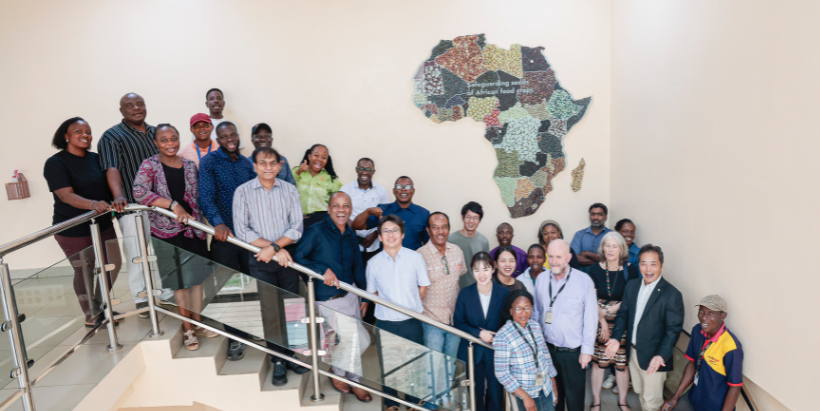
IITA–CGIAR, through the IITA Yam Breeding Program, hosted a donor delegation from Japan on 10–15 August as part of activities marking the launch of a new five-year project, “Improving food security and nutrition in Africa: Advancing yam productivity and nutritional/functional traits.” Funded by Japan’s Ministry of Agriculture, Forestry and Fisheries (MAFF), the project will run from June 2026 to May 2031 and aims to enhance yam productivity, nutritional quality, and value addition for farmers and consumers in Africa and beyond.
The Japanese delegation included Ryo Matsumoto, Associate Professor at the Tokyo University of Agriculture and IITA Yam Agronomist; Tanabe Ayano of MAFF, and representatives of the Embassy of Japan in Nigeria, Hitoshi Kozaki and Hitomi Niikura. The visit highlighted the longstanding partnership between IITA and Japan, with the Japanese officials noting that the MAFF project aligns with broader efforts to improve food security, family nutrition, and community resilience through science-based agricultural innovations.
Speaking during the project kick-off meeting, Hironori Ishiguro, MAFF Research Councilor, lauded the achievements of previous collaborations with IITA and expressed optimism about the new project. “For more than 15 years, our collaboration has produced many significant achievements, including the registration of the Sharp Sharp variety in Nigeria,” Ishiguro said. “With our previous collaborations, we have high expectations that this project will generate outcomes that will make significant contributions to food and nutrition security in Africa.”
The new phase of the MAFF project builds on the achievements of the previous phase (2021–2025), which led to the development of yam breeding materials adapted to low-fertility soils and the release of the popular Sharp Sharp yam variety. The new variety has gotten to farmers through extension systems and national partners. According to the yam breeding project leaders, the new phase will focus on developing and delivering high-performing yam varieties with enhanced productivity, nutritional value, and market appeal. The project will also explore beneficial bacteria-plant interactions for nitrogen fixation, a promising area of research that could help reduce fertilizer requirements and lower production costs for farmers while promoting more sustainable yam cultivation. As well as improving healthy seed yam production systems and developing value-added characteristics that can increase the crop’s market potential.
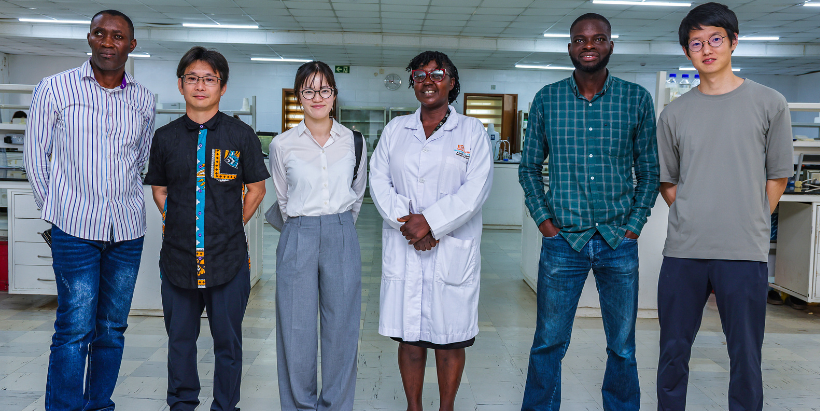
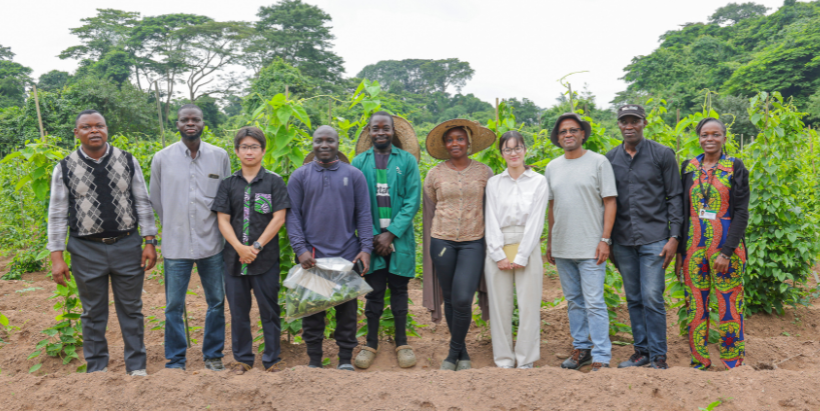
As part of the visit, delegates toured several IITA facilities, including the Genetic Resources Center (GRC), the Virology and Germplasm Health Unit, the Food and Nutrition Laboratory, the Bioscience Center, and the yam breeding fields. They gained first-hand insight into IITA’s cutting-edge research on germplasm conservation, disease diagnostics, nutritional analysis, healthy seed systems, molecular breeding support systems, and food quality assessment technologies. Delegates also visited yam breeding fields where ongoing trials are generating valuable data to support the development of superior varieties and technologies for farmers.
Technical discussions during the visit focused on identifying research outputs and genetic materials to incorporate into the new MAFF project. Head of IITA Yam Breeding Program, Asrat Amele, emphasized the importance of linking scientific discoveries with private-sector partners, such as OrientalBio, to ensure that innovations reach farmers and consumers. He emphasized the importance of integrating solutions from research and conservation into product development and commercialization.
Tanabe Ayano expressed appreciation for the opportunity to witness first-hand the institute’s contributions to food and nutrition security in Africa. She commended IITA’s world-class research facilities, including the Genetic Resources Center, which houses one of the world’s largest collections of crop genetic resources and plays a critical role in safeguarding biodiversity for future generations. She also highlighted the institute’s commitment to training young scientists and building research capacity across the continent.
Closing the event on behalf of IITA Director General Dr Simeon Ehui, Deputy Director General, Corporate Services, Hilde Koper-Limbourg expressed sincere appreciation to MAFF, the Embassy of Japan, and all project partners for their continued support. She expressed confidence that the new project would build on previous successes and deliver lasting benefits for farmers, consumers, and food systems across Africa.
The visit concluded with renewed commitments from IITA, MAFF, the Embassy of Japan in Nigeria, and collaborating partners to continue working together to harness science and innovation for sustainable food systems. With a shared vision and complementary expertise, the partnership is poised to deliver lasting impact for yam-producing communities and contribute to global efforts to achieve food and nutrition security.
Contributed by
Folake Oduntan