
NEWS

Building Burundi’s capacity for hybrid maize seed production
October 16, 2026
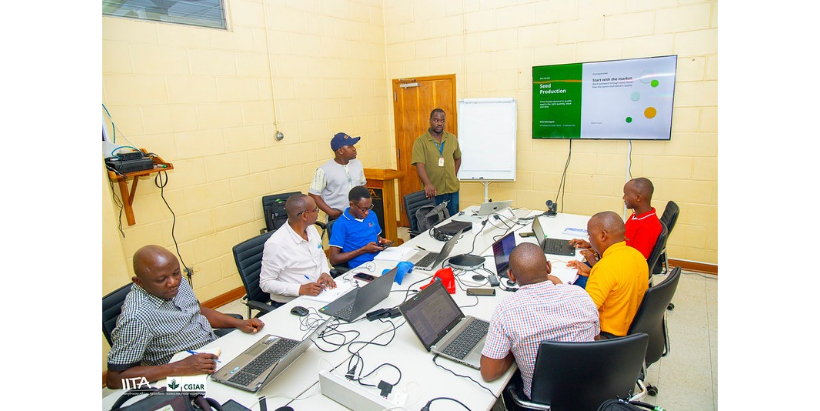
IITA Product Manager and Maize Breeder Idris Adejumobi leading a session on seed production.

Access to quality seed is one of the most important foundations of a productive maize sector. In Burundi, maize is a priority value chain under the Burundi Rwanda Integrated Development Programme (BRIDEP), which aims to strengthen agricultural production, cross-border trade, and regional integration. Through its Maize Improvement Program, IITA–CGIAR is supporting Burundi in building the technical capacity needed to produce and certify hybrid maize seed locally.

Improving access to high-quality seed remains a major challenge for maize production in Burundi. Demand for certified hybrid seed has risen sharply in recent years, with pre-orders frequently exceeding available supply. In some cases, demand has increased from hundreds of kilograms to several tons, highlighting the need for stronger local seed production systems capable of maintaining genetic purity, managing seed multiplication, and ensuring timely distribution to farmers.

To help address this gap, a delegation of Burundian researchers and seed-sector professionals recently completed an intensive three-week training program at IITA headquarters in Ibadan, Nigeria. The training, organized by IITA’s Maize Breeding Team and led by Prof. John Derera, Head of Breeding at IITA, was held from 14 September to 2 October as the first phase of a broader capacity-development initiative aimed at strengthening Burundi’s hybrid maize seed sector.
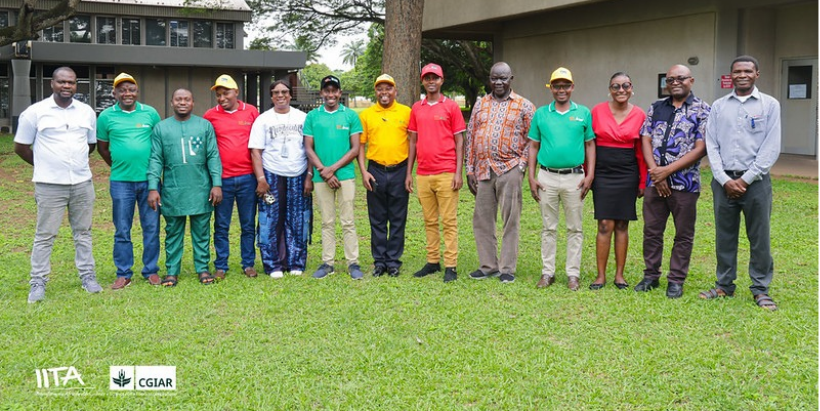
IITA Head of Breeding, Prof John Derera, and IITA Product Manager, Dean Muungani, alongside participants at the close of the training.

Over 15 days, participants completed nine modules covering the entire hybrid seed value chain. Topics included hybrid seed production technologies, early-generation, foundation and certified seed production, seed certification and quality control, seed processing and storage, germplasm health and seed shipment, product development, market profiling, and regulatory frameworks. The program combined classroom instruction with practical field-based learning to ensure participants gained hands-on experience in every stage of hybrid seed production.

“This training equips Burundi’s seed leaders to manage every stage of hybrid seed production,” said Prof. John Derera. “By combining theoretical rigor with practical field applications, we are empowering local experts to strengthen quality control and boost national maize productivity.”

The initiative is supported by the African Development Bank (AfDB) through BRIDEP, which identifies maize as a strategic value chain for regional agricultural development. Commending the training, BRIDEP Project Lead Dr Mutuo Patrick emphasized the importance of human capacity development in agricultural transformation.

“Building local expertise is central to BRIDEP’s mission,” he said. “Translating this knowledge into field practices will be critical to achieving long-term food security in Burundi and the wider region.”

For participants, the training delivered practical insights that can be immediately applied within Burundi’s seed sector. Hakizimana Everiste highlighted the importance of mastering parent-line maintenance and detasseling protocols to achieve greater national seed self-sufficiency. Meanwhile, university researcher Nsabiyumua Athanase said he plans to integrate the knowledge and methodologies gained during the course into academic curricula to help train the next generation of agronomists.
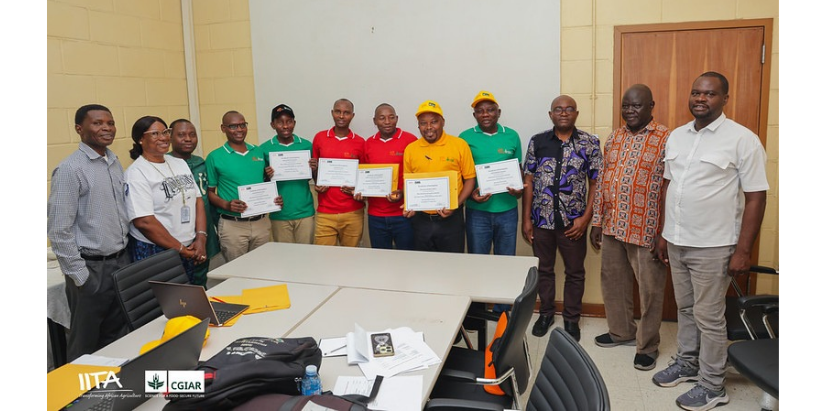
Trainees displaying their certificates of participation at the close of the training alongside facilitators and IITA staff.

Participants also gained a deeper understanding of maize seed systems and the market segments for hybrid maize. The course concluded with integrated field-learning activities and a session focused on developing a roadmap for Burundi’s hybrid maize seed sector. At the close of the program, participants received certificates recognizing their successful completion of the training.

Building on existing collaborations with the Institut des Sciences Agronomiques du Burundi (ISABU), the Seed Systems Group (SSG), and local seed enterprises, IITA and its partners have developed a multi-year implementation plan to support local hybrid maize seed production in Burundi.

Running from 2026 to 2028, the plan includes the development of field and laboratory production manuals, training for laboratory personnel, target product profile workshops, the establishment of a national multi-location hybrid testing pipeline, and learning exchanges with commercial seed companies and molecular quality-control facilities in Zambia and Zimbabwe. The initiative will culminate in the full operational deployment of a modernized local seed production system capable of supporting Burundi’s growing demand for high-quality hybrid maize seed.

By strengthening local expertise and seed-sector infrastructure, the initiative is expected to improve farmer access to quality seed, increase maize productivity, enhance resilience to climate-related shocks, and contribute to long-term food security in Burundi and the wider region.


Contributed by

Alice Omoteji and Anu Oyeleye

Scroll to Top
Olaosebikan, Olamide

Olamide Deborah Nwanze is a Senior Research Associate specializing in gender mainstreaming research to inform participatory and inclusive breeding, variety development, and seed systems policies regarding root, tuber, and banana (RTB) crops in the International Institute of Tropical Agriculture Headquarters, Ibadan, Nigeria. She is a PhD candidate at the University of Ibadan and holds an MSc and B. Agric in Agricultural Extension and Rural Development. Olamide is a fellow of the African Women in Agricultural Research and Development – Gender Responsive Agricultural Systems Policy (AWARD-GRASP) and the Gender Responsive Researchers Equipped for Agricultural Transformation (GREAT). She seeks to apply her gender-mainstreaming learnings, gender-responsive research, and policy development, and review expertise to facilitate women, youth, children, and vulnerable social group’s access to and adoption of agricultural Innovations that guarantee food, nutrition, income, and livelihood security in Africa. Her current roles include mentoring research fellows, development of guides and training manuals, implementation and adaptation of gender frameworks and tools, value chain actors’ engagement as citizen science partners, policy review and redesign, data management, and analysis. Her current research explores mixed methods and participatory and interdisciplinary approaches to capture and highlight gender dynamics, needs, preferences, and challenges stakeholders face within the agricultural livelihood value chain to prioritize gender-inclusive strategies in breeding programs, policy design, and implementation.

At IITA, she contributes to the implementation of the CGIAR Accelerated Breeding Initiative and Genetic Innovation Programs; participatory and gender research within the NextGen Cassava, HarvestPlus, RTBFoods, and Tricot-ClimMob 1000Farms Projects; and gender knowledge communication via the G-LENS webinar series, video documentary, policy briefs, publications, and blogs.


Recent publications

de Sousa, K., van Etten, J., Manners, R. Bello, A., Teeken, B., Olaosebikan, O., et al. 2024. The tricot approach: an agile framework for decentralized on-farm testing supported by citizen science. A retrospective. Agron. Sustain. Dev. 44, 8. https://doi.org/10.1007/s13593-023-00937-1

Madu, T., Onwuka, S., Nwafor, S., Onyemauwa, N., Ejechi, M., Ofoeze, M., Ukeje, B., Eluagu, C., Olaosebikan, O., Okoye, B., 2024. Gender-Inclusive Consumer Studies Improve Cassava Breeding in Nigeria in: Frontiers in Sociology, volume 9, number: 1224504, doi: 10.3389/fsoc.2024.1224504

Olaosebikan, O.; Bello, A.; Utoblo, O.; Okoye, B.; Olutegbe, N.; Garner, E.; Teeken, B.; Bryan, E.; Forsythe, L.; Cole, S.; Madu, T. 2023.  Stressors and Resilience within the Cassava Value Chain in Nigeria: Preferred Cassava Variety Traits and Response Strategies of Men and Women to Inform Breeding. Sustainability 15, 7837. https://doi.org/10.3390/su15107837

Okoye, B., Ofoeze, M., Ejechi, M., Onwuka, S., Nwafor, S., Onyemauwa, N., Ukeje, B., Eluagu, C., Obidiegwu, J.*, Olaosebikan, O., Madu, T.* 2023. Prioritizing preferred traits in the yam value chain in Nigeria: a gender situation analysis in: Frontiers in Sociology, volume 8, number: 1232626, pages 1 – 9, ISSN 2297-7775, 2023. https://www.frontiersin.org/articles/10.3389/fsoc.2023.1232626/full

Olaosebikan, O., Bello, A. A., de Sousa, K., Ndjouenkeu, R., Adesokan, M., Alamu, E. O., Agbona, A., van Etten, J., Kegah, F. N.*, Dufour, D., Bouniol, A., Teeken, B. 2023. Consumer acceptability of cassava gari-eba food products across cultural and environmental settings using the triadic comparison of technologies approach (tricot) in: Journal of the Science of Food and Agriculture,

Teeken, B., Olaosebikan, O., Bello, A. A., Madu, T.*, Cole, S. M. 2023. Qualitative assessment on the positionality and preferences of dyads in relation to cassava-related activities: working with tricot trial citizen scientists https://hdl.handle.net/10568/138326 Type: Manual

Bouniol, A., Ceballos, H., Bello, A. A., Teeken, B., Olaosebikan, O., Owoade, D., Agbona, A., Fotso Kuate, A., Madu, T.*, Okoye, B.*, Ofoeze, M.*, Nwafor, S.*, Onyemauwa, N.*, Adinsi, L.*, Forsythe, L., Dufour, D. 2023. Varietal impact on women’s labour, workload and related drudgery in processing root, tuber and banana crops: focus on cassava in sub-Saharan Africa in: Journal of the Science of Food and Agriculture, pages 1 – 25, ISSN 0022-5142,

Bello, A. A., Agbona, A., Olaosebikan, O., Edughaen, G., Dufour, D., Bouniol, A., Iluebbey, P., Ndjouenkeu, R.*, Rabbi, I. Y., Teeken, B. 2023. Genetic and environmental effects on processing productivity and food product yield: drudgery of women’s work in: Journal of the Science of Food and Agriculture, pages 1 – 32, ISSN 0022-5142, 5

Cavicchioli, M., Zimbiti, T., Teeken, B., Nwanze, D.O., Liani, M., Parkes, E. & Bello, A. 2023. IITA-Gender Responsive Breeding Training Report. Genetic Resources Center, IITA-HQ, Ibadan, 21-23 September, 2022. Ibadan, Nigeria: IITA, (34 p.).https://hdl.handle.net/10568/131368

Agbona, A. Peteti P., Teeken B., Olaosebikan O. Bello, A. A., Parkes, E., Rabbi, I. Y., Mueller, L., Egesi, C., Kulakow, P. 2022. Data Management in Multi-disciplinary African RTB Crop Breeding Programs. In: Williamson, H.F., Leonelli, S. (eds) Towards Responsible Plant Data Linkage: Data Challenges for Agricultural Research and Development. Springer, Cham. https://doi.org/10.1007/978-3-031-13276-6_5

Lora Forsythe, Pricilla Marimo, Sarah Mayanja, Olamide D. Olaosebikan, Esme Stuart, Bela Teeken, Benjamin Okoye, Tessy Madu, (2021). Cross-product Gender Analysis of RTBfoods Step 2 Gendered Food Mapping on RTB Products. Understanding the Drivers of Trait Preferences and the Development of Multi-user RTB Product Profiles, WP1. London, UK: RTBfoods Field Scientific Report, 30 p.

Teeken, B., Garner, E., Agbona, A., Balogun, I., Olaosebikan, O., Bello, A., Madu, T., Okoye, B., Egesi, C., Kulakow, P. and Tufan, H.A. 2021. Beyond “Women’s Traits”: Exploring How Gender, Social Difference, and Household Characteristics Influence Trait Preferences. Frontiers Sustainable Food Systems 5:740926. https://doi.org/10.3389/fsufs.2021.740926

Teeken, B., Agbona, A., Bello, A., Olaosebikan, O., Alamu, E., Adesokan, M., Awoyale, W., Madu, T., Okoye, B., Chijioke, U., Owoade, D., Okoro, M., Bouniol, A., Dufour, D., Hershey, C., Rabbi, I., Maziya‐Dixon, B., Egesi, C., Tufan, H. and Kulakow, P. (020. Understanding cassava varietal preferences through pairwise ranking of gari‐eba and fufu prepared by local farmer–processors. Int J Food Sci Technol. https://doi.org/10.1111/ijfs.14862

Bela Teeken, Olamide Olaosebikan, Ireti Balogun, Benjamin Okoye, Tessy Madu, Steven Cole, Abolore Bello, Elizabeth Parkes. (2020). Piloting the G+ customer and product profile tools for gender-responsive cassava breeding in Nigeria. Nigeria: International Institute of Tropical Agriculture (IITA). https://hdl.handle.net/20.500.11766/13000