ABUJA, Nigeria, October 20, 2026 — Improving food security requires more than increasing fertilizer use. It requires better soil intelligence, stronger collaboration, and practical systems that help farmers make informed decisions about the nutrients they apply to their fields. This was a recurring message from the 2026 Nigeria Fertilizer Summit on “Phosphorus and food security: Challenges in food production systems in Nigeria,” held on 19-20 October in Abuja.
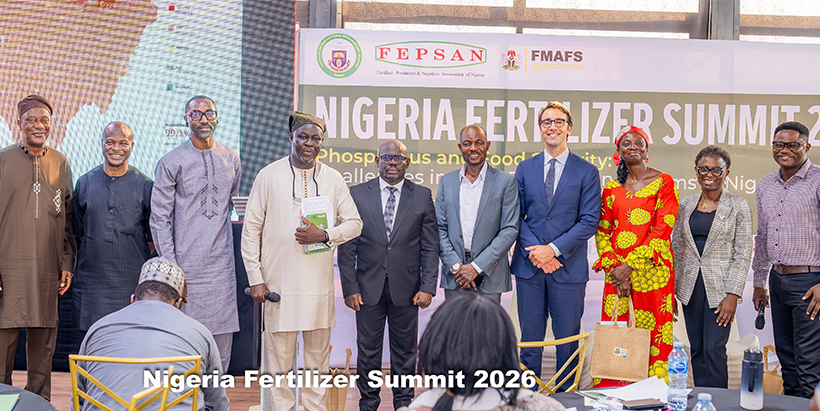
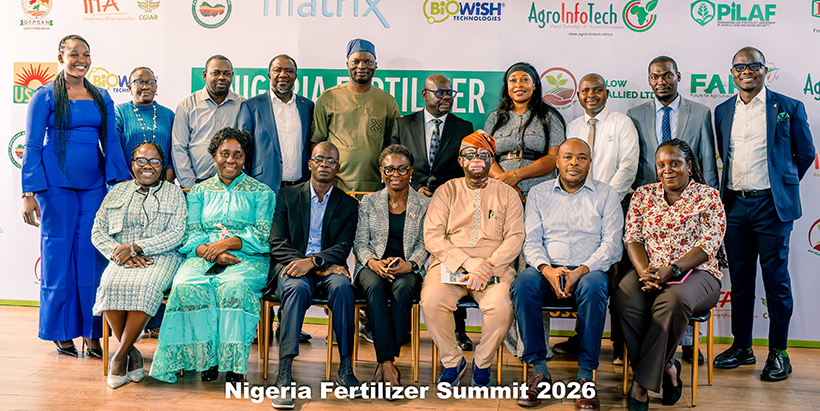
The summit, organized by the Institute of Agricultural Research and Training (IAR&T), Obafemi Awolowo University, in partnership with the Fertilizer Producers and Suppliers Association of Nigeria (FEPSAN) and the Federal Ministry of Agriculture and Food Security’s Fertilizer and Inputs Support Services (FISS) Department, convened key stakeholders across Nigeria’s agricultural sector to explore how improved nutrient management can drive productivity and strengthen food security.
During the opening session, the Honorable Minister of Agriculture and Food Security, Senator Aliyu Sabi Abdullahi, represented by the Director of Agricultural Land and Climate Change Management Services, Federal Ministry of Agriculture and Food Security, Oshadiya Olanipekun, emphasized the importance of soil data, soil testing, and crop-specific fertilizer recommendations in improving farmers’ outcomes. He also acknowledged the contribution of the Regional Hub for Fertilizer and Soil Health for West Africa and the Sahel. The director noted that collaboration with the Hub creates opportunities to leverage regional expertise, technical support, and methodologies for site-specific fertilizer recommendations.
Similarly, the Vice-Chancellor of Obafemi Awolowo University, Prof. Adebayo Simeon Bamire, stressed that improving agricultural productivity goes beyond fertilizer use alone and requires responsible nutrient management, research, innovation, and stronger partnerships.
Improving fertilizer-use efficiency through soil intelligence
Throughout the summit, speakers challenged the idea that agricultural transformation can be achieved simply by increasing fertilizer application. Discussions instead focused on fertilizer-use efficiency, balanced fertilization, nutrient management, and fertilizer recommendations tailored to local conditions. “Improving crop productivity is not only about applying fertilizer. It is about ensuring the right nutrient is applied in the right amount, at the right place, and under the right conditions,” said Prof. Vincent Aduramigba-Modupe, soil scientist and modeling expert at IAR&T and one of the summit organizers.
A major focus of the discussions was the growing role of soil data and information systems in agricultural decision-making. Participants highlighted the importance of digital soil maps, soil information systems, laboratory services, site-specific nutrient recommendations, and digital advisory tools in helping farmers and advisers make more informed decisions. Prof. Jibrin Mohammed Jibrin, Visiting Scientist with the Regional Hub and Professor of Soil Science at Bayero University Kano, described soil intelligence as fundamental to achieving food security. “The basis of food production and food security is the soil. You need healthy soil to produce well and feed the nation with nutritious food. To do that, you need soil intelligence,” he said.
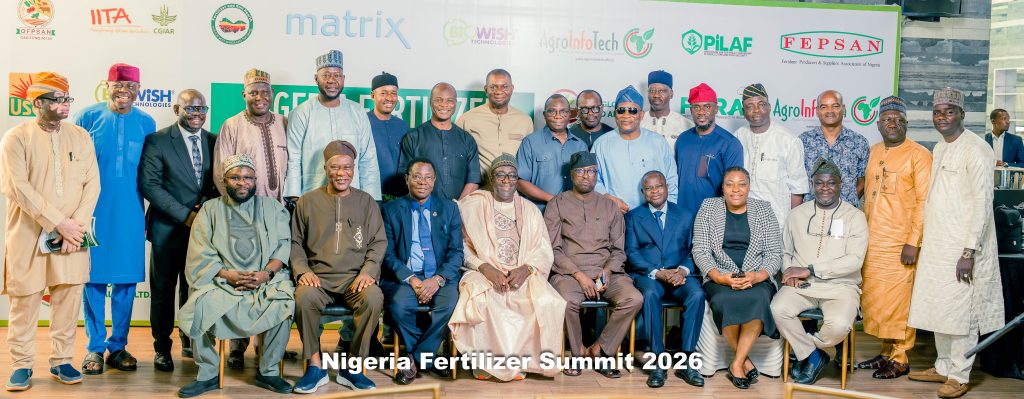
Presentations by the Regional Hub highlighted ongoing efforts to strengthen evidence-based nutrient management across Nigeria and the wider West Africa and Sahel region. These include the development of digital soil maps, support for national soil information systems, laboratory assessments and the validation of site- and crop-specific fertilizer recommendations. According to Dr Bello Muhammad Shehu, Senior Agronomist at the Regional Hub, improving phosphorus management is not simply about increasing fertilizer application. “It is about understanding what different soils and crops need and ensuring that farmers have access to the right products and the right advice,” he said.
Strengthening coordination and regional collaboration
Beyond technical solutions, participants emphasized the need for stronger coordination among institutions and initiatives working on soil health and fertilizer management. Although several initiatives are already underway, fragmented approaches can lead to duplication and slow implementation. Discussions highlighted the role of technical working groups, the Coalition of the Willing and Nigeria’s National Technical Team (NTT). The NTT serves as an interface between the country and the Regional Hub, helping align national priorities with regional expertise and technical support. “If we want to achieve our goals, we have to work together. Too many initiatives have been implemented in silos. Real progress will come when stakeholders align, collaborate and follow through on agreed actions,” Jibrin said.
Further discussions highlighted the Regional Hub’s role as a technical resource and convening platform for countries working to improve fertilizer use and soil health. Established as an ECOWAS sub-program, the Hub supports fertilizer and soil health priorities across West Africa and the Sahel by connecting regional expertise, technical support, and country-led initiatives. The Hub works with a consortium of partners including the International Institute of Tropical Agriculture (IITA), the International Fertilizer Development Center (IFDC), OCP Africa, the International Soil Reference and Information Center (ISRIC), the African Plant Nutrition Institute (APNI) and Mohammed VI Polytechnic University (UM6P), alongside National Technical Teams, country focal points and research institutions across West Africa and the Sahel.
In a goodwill message, the incoming Hub Director, Bastiaan Huesken, said the Hub’s objective is to help countries transform evidence into practical solutions for farmers. “The Hub was created to turn soil data into recommendations, and recommendations into products and advice that farmers can use,” he said.
Turning discussions into action
As the summit concluded, participants adopted resolutions to strengthen soil information systems, extension and advisory services, fertilizer quality monitoring, fertilizer use efficiency, and digital decision-support tools. The resolutions underscored the need to translate research, soil data, and stakeholder collaboration into practical improvements in nutrient management and agricultural productivity.
For many participants, the goal extends beyond fertilizer application to healthier soils, more productive farms, and stronger agricultural economies. “The goal is better fertilizer use, healthier soils, better farm productivity and economies,” said Dr Donald Madukwe, Head of Partnerships in Africa at OCP Africa.
About the Regional Hub for Fertilizer and Soil Health for West Africa and the Sahel
Established in June 2024 and endorsed as an ECOWAS sub-program, the Regional Hub provides technical assistance to support investments in fertilizer and soil health across 17 countries in West Africa and the Sahel.
Hosted at the IITA campus in Ibadan, Nigeria, the Hub operates under ECOWAS governance. It is jointly managed by IITA, APNI, IFDC, Mohammed VI Polytechnic University (UM6P) and ISRIC, with support from the World Bank and OCP Africa. The Hub supports countries through 20 technical functions across six thematic areas, connecting scientific evidence, institutional capacity, policy support and regional collaboration.
More information: https://regionalhub-west.org/
Media contact: Ilerioluwa Oladipupo, Communications Officer, I.Oladipupo@cgiar.org
Contributed by
Ilerioluwa Oladipupo
Recent stories