
NEWS

IITA prepares for Impact Bundle trials following advances in gene editing, soil data and climate tools
November 27, 2026
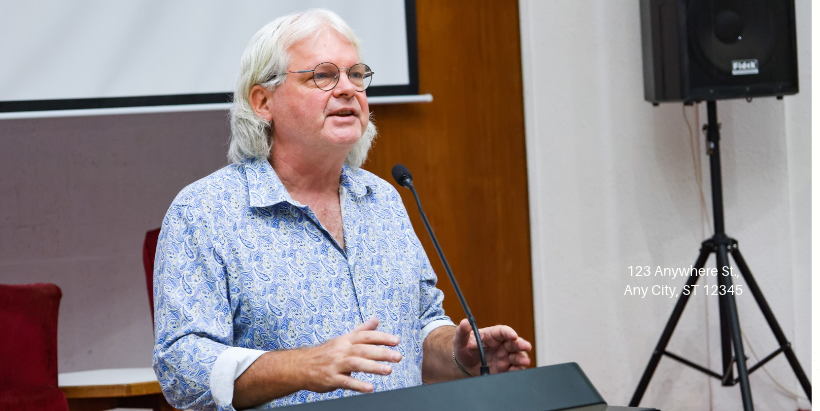
Deputy Director General, Research for Development giving his presentation at the 2026 IITA work planning week.

To bring together technologies, partnerships and support services in country-specific packages designed to address farmers’ needs, IITA will begin testing a new approach to delivering agricultural research impact across countries in 2027.

The approach, known as Impact Bundles, is intended to make the journey from scientific research to adoption more coordinated, efficient and responsive to the priorities of different farming systems.

In an interview during the IITA 2026 Work Planning Week, Deputy Director General, Research for Development, Dr Bernard Vanlauwe, said the Institute is developing draft bundles for countries including the Democratic Republic of Congo, Ghana, Nigeria, and Tanzania, with a two-year trial planned to assess their effectiveness.

Under the approach, each country package will identify the combination of technologies, partners and services required to deliver results in prioritized farming systems and impact areas.

“This approach is new. It is going to change the way countries operationalize IITA’s agenda, the way we sell and promote IITA’s agenda,” Dr Vanlauwe said.

Beyond improving delivery, the bundles are also expected to help identify research gaps and direct IITA’s science programs towards challenges that emerge as the packages are implemented.

The initiative builds on a shift IITA made about 12 years ago to invest not only in research but also in facilitating its delivery. This led to the establishment of its Research for Development (R4D) and Partnerships for Delivery (P4D) Directorates, with programs such as the Technologies for African Agricultural Transformation (TAAT) Clearinghouse helping to connect research and delivery.

Dr Vanlauwe described this as a continuous pipeline in which ideas move through prototyping, validation and farm-scale piloting before reaching farmers.

“We never start from zero,” he said, explaining that research initiated several years earlier can produce results today, while new investments continue to generate technologies for future delivery.

Speaking on the achievements of 2026, Dr Vanlauwe noted that the Research for Development Directorate recorded significant results spanning genetic innovation, resilient agrifood systems and broader system transformation.
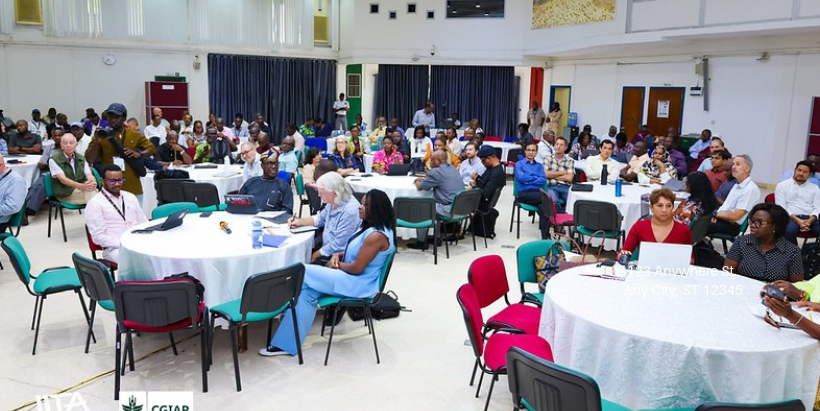
IITA Research for Development and Partnership for Delivery and Scaling staff during a discussion session at the planning week.

In genetic innovation, IITA advanced gene-editing research across several crops and traits, with some countries granting permission for edited crops to undergo testing under real-world field conditions.

The Institute also made progress in strengthening the delivery of quality planting materials. Through the adaptation of its Seed Tracker, IITA is improving the traceability of vegetatively propagated crops, including cassava, yam and banana, from producers to end users, with quality assurance built into the process.

In soil health, efforts to establish national soil information systems in several countries are providing decision-makers and investors with better information about soil conditions and constraints. The Regional Hub for Fertilizer and Soil Health, based in Ibadan, serves West Africa and the Sahel, providing research insights, technical assistance and tools to support better fertilizer and soil management decisions.

For Dr Vanlauwe, soil health and crop breeding are inseparable parts of agricultural innovation.

“Without good agronomy, without fertilizer, that genetic gain will not be delivered,” he said, adding that improved germplasm is equally important because healthy, high-performing crops are needed to make effective use of soil nutrients.

Climate adaptation also featured prominently in the Institute’s 2026 results. Through the ResiliSense survey, IITA assessed the resilience of 2,626 households in Nigeria and Niger to examine their ability to withstand and recover from shocks.

The findings showed an average resilience score of 57 out of 100, while households scored just 21 in their connections to groups, programs, and training that could help them adapt to changing circumstances.

The analysis points to the need for stronger support systems, including access to affordable finance, savings groups and other mechanisms that enable farmers to respond to shocks and adopt improved practices.

IITA also consolidated proven climate technologies into five toolkits on the TAAT e-Catalogue, making practical options more accessible to stakeholders working to strengthen climate resilience.

On nutrition and system transformation, the Institute continued to lead the CGIAR Biofortification Coordination Team, bringing together five CGIAR science programs, while securing substantial new resources for its climate adaptation program.

Ultimately, the significance of these investments is to be measured by what farmers are growing and using, rather than by scientific publications alone.

Dr Vanlauwe pointed to a recent trip from Kano to southern Kaduna, where he observed extensive areas planted with IITA-developed soybean varieties.

He also estimated that there was at least a 50 percent chance that the cassava encountered across Nigeria was an IITA variety, illustrating the extent to which the Institute’s breeding work has reached farmers.

However, he believes there is room to accelerate this progress, particularly for crops that are more difficult to multiply and distribute.

What comes next in 2027?

Beyond testing Impact Bundles, IITA plans to expand its gene-editing research, establish an Agronomic Microbiome Innovation Hub in collaboration with the International Rice Research Institute (IRRI), and launch a Science of Scaling program to gather early feedback on prototype solutions and improve their pathway to wider adoption.

Investment in scientific talent will also receive attention. Following external recognition for several IITA scientists, including the Japan International Award for Young Agricultural Researchers, the Institute is strengthening its mentoring program and introducing internal awards for Best PhD Project and Best Mentor, building on its existing Early Career Awards.

The Institute will also continue investing in technologies that accelerate the multiplication and delivery of improved planting materials, while strengthening private-sector partnerships for grain and legume seed systems.

These efforts will form part of the broader research direction as IITA marks its 60th anniversary, with a science conference expected to examine research priorities in the context of CGIAR‘s Africa 2045 strategy. When asked to identify the idea that should define IITA’s science in 2027, Dr Vanlauwe described it as “science that’s absolutely relevant for the people we are working with.”


Contributed by

Anu Oyeleye

Scroll to Top
Olaosebikan, Olamide

Olamide Deborah Nwanze is a Senior Research Associate specializing in gender mainstreaming research to inform participatory and inclusive breeding, variety development, and seed systems policies regarding root, tuber, and banana (RTB) crops in the International Institute of Tropical Agriculture Headquarters, Ibadan, Nigeria. She is a PhD candidate at the University of Ibadan and holds an MSc and B. Agric in Agricultural Extension and Rural Development. Olamide is a fellow of the African Women in Agricultural Research and Development – Gender Responsive Agricultural Systems Policy (AWARD-GRASP) and the Gender Responsive Researchers Equipped for Agricultural Transformation (GREAT). She seeks to apply her gender-mainstreaming learnings, gender-responsive research, and policy development, and review expertise to facilitate women, youth, children, and vulnerable social group’s access to and adoption of agricultural Innovations that guarantee food, nutrition, income, and livelihood security in Africa. Her current roles include mentoring research fellows, development of guides and training manuals, implementation and adaptation of gender frameworks and tools, value chain actors’ engagement as citizen science partners, policy review and redesign, data management, and analysis. Her current research explores mixed methods and participatory and interdisciplinary approaches to capture and highlight gender dynamics, needs, preferences, and challenges stakeholders face within the agricultural livelihood value chain to prioritize gender-inclusive strategies in breeding programs, policy design, and implementation.

At IITA, she contributes to the implementation of the CGIAR Accelerated Breeding Initiative and Genetic Innovation Programs; participatory and gender research within the NextGen Cassava, HarvestPlus, RTBFoods, and Tricot-ClimMob 1000Farms Projects; and gender knowledge communication via the G-LENS webinar series, video documentary, policy briefs, publications, and blogs.


Recent publications

de Sousa, K., van Etten, J., Manners, R. Bello, A., Teeken, B., Olaosebikan, O., et al. 2024. The tricot approach: an agile framework for decentralized on-farm testing supported by citizen science. A retrospective. Agron. Sustain. Dev. 44, 8. https://doi.org/10.1007/s13593-023-00937-1

Madu, T., Onwuka, S., Nwafor, S., Onyemauwa, N., Ejechi, M., Ofoeze, M., Ukeje, B., Eluagu, C., Olaosebikan, O., Okoye, B., 2024. Gender-Inclusive Consumer Studies Improve Cassava Breeding in Nigeria in: Frontiers in Sociology, volume 9, number: 1224504, doi: 10.3389/fsoc.2024.1224504

Olaosebikan, O.; Bello, A.; Utoblo, O.; Okoye, B.; Olutegbe, N.; Garner, E.; Teeken, B.; Bryan, E.; Forsythe, L.; Cole, S.; Madu, T. 2023.  Stressors and Resilience within the Cassava Value Chain in Nigeria: Preferred Cassava Variety Traits and Response Strategies of Men and Women to Inform Breeding. Sustainability 15, 7837. https://doi.org/10.3390/su15107837

Okoye, B., Ofoeze, M., Ejechi, M., Onwuka, S., Nwafor, S., Onyemauwa, N., Ukeje, B., Eluagu, C., Obidiegwu, J.*, Olaosebikan, O., Madu, T.* 2023. Prioritizing preferred traits in the yam value chain in Nigeria: a gender situation analysis in: Frontiers in Sociology, volume 8, number: 1232626, pages 1 – 9, ISSN 2297-7775, 2023. https://www.frontiersin.org/articles/10.3389/fsoc.2023.1232626/full

Olaosebikan, O., Bello, A. A., de Sousa, K., Ndjouenkeu, R., Adesokan, M., Alamu, E. O., Agbona, A., van Etten, J., Kegah, F. N.*, Dufour, D., Bouniol, A., Teeken, B. 2023. Consumer acceptability of cassava gari-eba food products across cultural and environmental settings using the triadic comparison of technologies approach (tricot) in: Journal of the Science of Food and Agriculture,

Teeken, B., Olaosebikan, O., Bello, A. A., Madu, T.*, Cole, S. M. 2023. Qualitative assessment on the positionality and preferences of dyads in relation to cassava-related activities: working with tricot trial citizen scientists https://hdl.handle.net/10568/138326 Type: Manual

Bouniol, A., Ceballos, H., Bello, A. A., Teeken, B., Olaosebikan, O., Owoade, D., Agbona, A., Fotso Kuate, A., Madu, T.*, Okoye, B.*, Ofoeze, M.*, Nwafor, S.*, Onyemauwa, N.*, Adinsi, L.*, Forsythe, L., Dufour, D. 2023. Varietal impact on women’s labour, workload and related drudgery in processing root, tuber and banana crops: focus on cassava in sub-Saharan Africa in: Journal of the Science of Food and Agriculture, pages 1 – 25, ISSN 0022-5142,

Bello, A. A., Agbona, A., Olaosebikan, O., Edughaen, G., Dufour, D., Bouniol, A., Iluebbey, P., Ndjouenkeu, R.*, Rabbi, I. Y., Teeken, B. 2023. Genetic and environmental effects on processing productivity and food product yield: drudgery of women’s work in: Journal of the Science of Food and Agriculture, pages 1 – 32, ISSN 0022-5142, 5

Cavicchioli, M., Zimbiti, T., Teeken, B., Nwanze, D.O., Liani, M., Parkes, E. & Bello, A. 2023. IITA-Gender Responsive Breeding Training Report. Genetic Resources Center, IITA-HQ, Ibadan, 21-23 September, 2022. Ibadan, Nigeria: IITA, (34 p.).https://hdl.handle.net/10568/131368

Agbona, A. Peteti P., Teeken B., Olaosebikan O. Bello, A. A., Parkes, E., Rabbi, I. Y., Mueller, L., Egesi, C., Kulakow, P. 2022. Data Management in Multi-disciplinary African RTB Crop Breeding Programs. In: Williamson, H.F., Leonelli, S. (eds) Towards Responsible Plant Data Linkage: Data Challenges for Agricultural Research and Development. Springer, Cham. https://doi.org/10.1007/978-3-031-13276-6_5

Lora Forsythe, Pricilla Marimo, Sarah Mayanja, Olamide D. Olaosebikan, Esme Stuart, Bela Teeken, Benjamin Okoye, Tessy Madu, (2021). Cross-product Gender Analysis of RTBfoods Step 2 Gendered Food Mapping on RTB Products. Understanding the Drivers of Trait Preferences and the Development of Multi-user RTB Product Profiles, WP1. London, UK: RTBfoods Field Scientific Report, 30 p.

Teeken, B., Garner, E., Agbona, A., Balogun, I., Olaosebikan, O., Bello, A., Madu, T., Okoye, B., Egesi, C., Kulakow, P. and Tufan, H.A. 2021. Beyond “Women’s Traits”: Exploring How Gender, Social Difference, and Household Characteristics Influence Trait Preferences. Frontiers Sustainable Food Systems 5:740926. https://doi.org/10.3389/fsufs.2021.740926

Teeken, B., Agbona, A., Bello, A., Olaosebikan, O., Alamu, E., Adesokan, M., Awoyale, W., Madu, T., Okoye, B., Chijioke, U., Owoade, D., Okoro, M., Bouniol, A., Dufour, D., Hershey, C., Rabbi, I., Maziya‐Dixon, B., Egesi, C., Tufan, H. and Kulakow, P. (020. Understanding cassava varietal preferences through pairwise ranking of gari‐eba and fufu prepared by local farmer–processors. Int J Food Sci Technol. https://doi.org/10.1111/ijfs.14862

Bela Teeken, Olamide Olaosebikan, Ireti Balogun, Benjamin Okoye, Tessy Madu, Steven Cole, Abolore Bello, Elizabeth Parkes. (2020). Piloting the G+ customer and product profile tools for gender-responsive cassava breeding in Nigeria. Nigeria: International Institute of Tropical Agriculture (IITA). https://hdl.handle.net/20.500.11766/13000