
DDG-R4D visits new southern Africa Hub facility
May 21, 2016
From 16 to 18 May, Deputy Director General for Research-for-Development (R4D), Ylva Hillbur, was at the new southern Africa Hub campus in Kabangwe, Lusaka Province, Zambia. During the 3-day visit, the DDG familiarized herself with the campus’ facilities, met with Hub-based scientists, learned of the latest developments in R4D projects and activities in the region, talked to local partners, and updated staff of the Institute’s new and ongoing R4D initiatives.
 “It’s been quite a while since I was at this site. The last time I was here was way back in September 2013,” said Hillbur. She was referring to the ground breaking event of the Southern Africa Research and Administrative Hub (SARAH) campus during that year. “I am very impressed at how this campus looks now. Although I see that there are still some things that need to be finalized, it is good to see that IITA-Zambia now really has a place it can call home,” the DDG added.
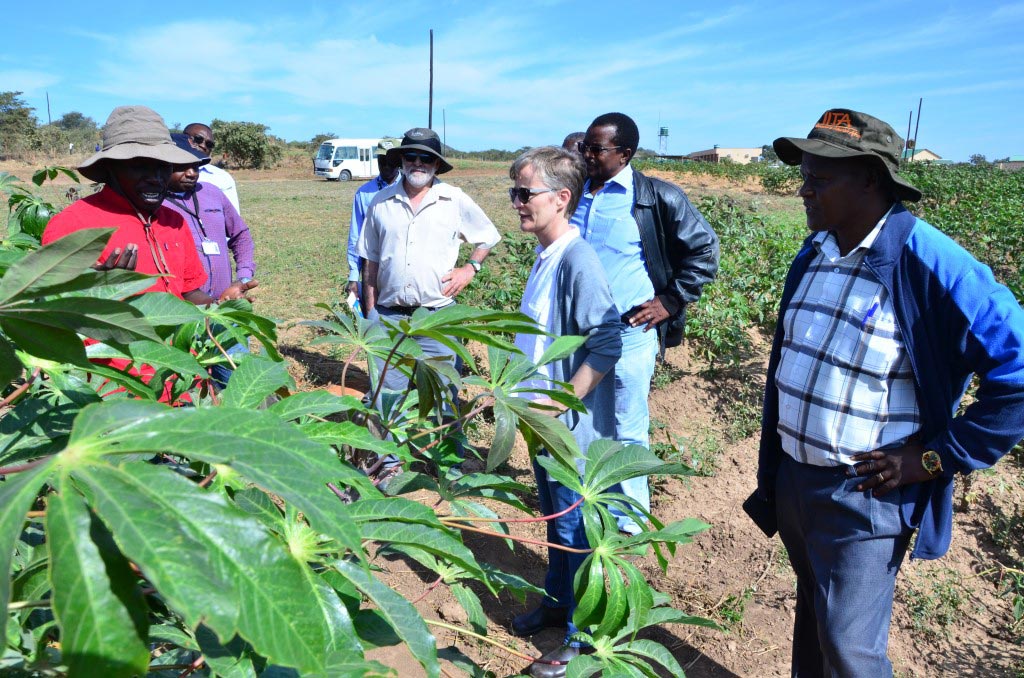
On the first day of her visit, Hillbur was given a tour of the office and research facilities at the SARAH campus by IITA-Zambia scientists led by David Chikoye, Regional Director for Southern Africa. Hillbur was shown the various field experiments going on at the site, particularly the research trials on cassava, soybean, cowpea, and maize.
To complement the field inspections, IITA-Zambia scientists also presented Hillbur with updates of their respective projects being conducted in the region, highlighting research outputs as well as challenges. This continued into the afternoon of the following day.
In the morning of the second day, the DDG was accompanied by Chikoye and Godfree Chigeza, IITA-Zambia soybean breeder, to private seed companies MRI-Syngenta and ZamSeed, local partners that IITA-Zambia collaborates with in various projects. Here, Hillbur was briefed about the work being done by the companies in relation to seed distribution in the country and how IITA works with them in ensuring that seeds of improved varieties developed by the Institute reach Zambian smallholder farmers.
Rounding up her tour of the Hub, Hillbur delivered a presentation on “Internal Review Board and Research Ethics at IITA” on the final day of her visit. During the seminar, the DDG updated IITA-Zambia staff about the latest institutional and CGIAR-level developments relating to R4D, specifically highlighting the need for scientists to publish their work more.
“The only way for IITA’s work to be known and be used by the scientific community, thereby contributing to the advancement of agricultural science, is for us to publish especially in recognized journals with a high impact factor,” she stressed. “I am happy to report that 2015 saw a substantial increase in the number of publications that IITA scientists produced compared to 2014, but I am encouraging you to do even more this year and in the future,” she added.
The DDG briefly discussed the Internal Review Board and the recently introduced Research Ethics Policy of the institute. “I encourage everyone here to read through the policy and familiarize yourselves with its provisions as this will have important implications on how we do our research, particularly those involving human and animal subjects,” the DDG underscored.
At the end of her seminar, Hillbur thanked Chikoye and all IITA-Zambia staff for making her visit a fruitful one. “It has definitely been a productive and at the same time enjoyable trip,” she said. “It’s always a pleasure to come to this region, particularly here in Zambia. I will definitely be back again soon. Thank you all,” she concluded.
“It’s been quite a while since I was at this site. The last time I was here was way back in September 2013,” said Hillbur. She was referring to the ground breaking event of the Southern Africa Research and Administrative Hub (SARAH) campus during that year. “I am very impressed at how this campus looks now. Although I see that there are still some things that need to be finalized, it is good to see that IITA-Zambia now really has a place it can call home,” the DDG added.
On the first day of her visit, Hillbur was given a tour of the office and research facilities at the SARAH campus by IITA-Zambia scientists led by David Chikoye, Regional Director for Southern Africa. Hillbur was shown the various field experiments going on at the site, particularly the research trials on cassava, soybean, cowpea, and maize.
To complement the field inspections, IITA-Zambia scientists also presented Hillbur with updates of their respective projects being conducted in the region, highlighting research outputs as well as challenges. This continued into the afternoon of the following day.
In the morning of the second day, the DDG was accompanied by Chikoye and Godfree Chigeza, IITA-Zambia soybean breeder, to private seed companies MRI-Syngenta and ZamSeed, local partners that IITA-Zambia collaborates with in various projects. Here, Hillbur was briefed about the work being done by the companies in relation to seed distribution in the country and how IITA works with them in ensuring that seeds of improved varieties developed by the Institute reach Zambian smallholder farmers.
Rounding up her tour of the Hub, Hillbur delivered a presentation on “Internal Review Board and Research Ethics at IITA” on the final day of her visit. During the seminar, the DDG updated IITA-Zambia staff about the latest institutional and CGIAR-level developments relating to R4D, specifically highlighting the need for scientists to publish their work more.
“The only way for IITA’s work to be known and be used by the scientific community, thereby contributing to the advancement of agricultural science, is for us to publish especially in recognized journals with a high impact factor,” she stressed. “I am happy to report that 2015 saw a substantial increase in the number of publications that IITA scientists produced compared to 2014, but I am encouraging you to do even more this year and in the future,” she added.
The DDG briefly discussed the Internal Review Board and the recently introduced Research Ethics Policy of the institute. “I encourage everyone here to read through the policy and familiarize yourselves with its provisions as this will have important implications on how we do our research, particularly those involving human and animal subjects,” the DDG underscored.
At the end of her seminar, Hillbur thanked Chikoye and all IITA-Zambia staff for making her visit a fruitful one. “It has definitely been a productive and at the same time enjoyable trip,” she said. “It’s always a pleasure to come to this region, particularly here in Zambia. I will definitely be back again soon. Thank you all,” she concluded.
John Okoth (in red), PhD student being hosted at the Hub, explains to Hillbur about his on-campus cassava fertigation experiment
Contributed by
Recent stories
No items found