
IITA NEWS

Gender-inclusive cassava breeding: Insights from commercial seed companies in Nigeria
July 11, 2025

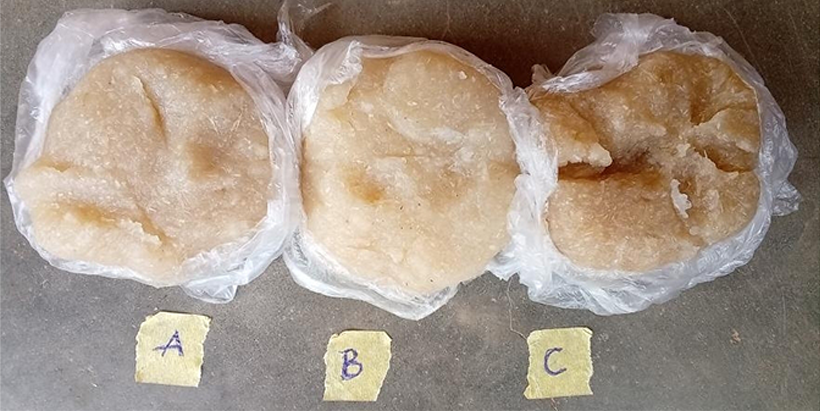
The different gari prepared by the processor into eba product samples.

Since 2015, Nigeria’s public cassava breeding program, led by IITA in collaboration with the National Root Crops Research Institute (NRCRI), has focused on developing new cassava varieties to cater to the diverse needs of cassava users across the value chain. A key aspect of this initiative has been identifying gender-specific traits preferences, ensuring that breeding decisions optimally align with the unique priorities of both women and men along the cassava value chain.

A recent study shows that beyond conventional research that interacts directly with crop users along the value chain, commercial seed companies such as IITA GoSeed and Umudike Seeds have become important sources of insights on gender specific preferences and show large potential. By promoting and selling improved seeds (in the form of stem cuttings in the case of cassava) through the upcoming formal commercial seed system, these companies acquire valuable feedback from seed users, thereby validating and complimenting earlier research findings on gender-specific trait preferences and providing breeders with market intelligence data in real time to pragmatically steer future investments.

To assess the role of commercial seed businesses in capturing gendered user feedback, researchers from IITA and NRCRI adopted a case study approach focused on IITA GoSeed and Umudike Seeds commercial companies. It included six key informant interviews with company staff (three men and three women), alongside reviews of company reports and sales data. Findings confirm the importance of previously identified traits such as plant architecture (branched stems and a wide canopy to suppress weeds) and suitability for processing. However, new gender-preferred traits also emerged: ratooning ability (allowing cutting stems from a plant without the plant being affected much) and sweet, poundable cassava roots suitable for direct consumption after boiling.
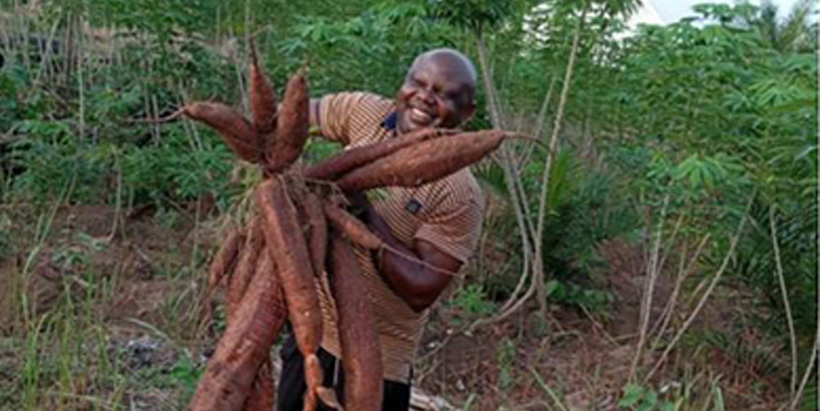
One of the cassava producers expressing delight with his harvest output from the newly released variety of cassava.

Recently released umbrella-shaped varieties like Game-changer, Obasanjo-2, and Baba-70 are gaining popularity. Notably, women village seed entrepreneurs (VSEs) who sell stems in their communities demonstrated a distinct preference for Game-changer and Farmers’ Pride varieties, surpassing the demand for these varieties by men.   These insights highlight that gendered roles and norms equally influence cassava varietal preferences within the seed market.

Earlier research conducted in cassava-producing regions of southwest and southeast Nigeria shows that high yield, root size, early maturity, and dry matter content are universally valued. Men leaned toward agronomic traits such as field appearance and canopy cover, while women prioritized processing and food products’ qualities more. Participatory processing evaluations of cassava products such as gari, eba, and fufu reinforced the demand for qualities like swelling capacity, texture, and color, which impact marketability and profitability.
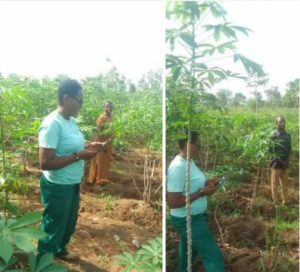
A Tricot farmer discussing her preferences for plant architecture.

The participatory research approaches used in these earlier studies, such as mother-baby trials, tricot, and participatory processing evaluations with renowned processors in farming communities, have significantly improved the inclusion of users’ perspectives. The lead researcher, IITA Senior Research Supervisor Durodola Owoade, however, stressed that further integrating participatory approaches like tricot within the seed systems commercial activities of stem selling, and working with stem sellers, can enhance the connection between user feedback and breeding innovation, ultimately fostering a more inclusive and sustainable cassava seed system in Nigeria.

In conclusion, seed businesses must actively connect to research by providing feedback guiding the selection of new commercial crop varieties. This is especially important in a growing formal seed sector, where farmers are increasingly looking for high-performing varieties with clear benefits: varieties that are not easily accessed through friends or neighbours and that they are thus willing to pay for.

To boost the impact and relevance of research, companies like IITA GoSeed and Umudike Seeds offer excellent platforms for integrating social science, participatory approaches, and transdisciplinary action research. Their involvement helps identify market segments that include different social, and gender groups and supports the development of stronger investment cases for breeding programs aligned with the One CGIAR social impact areas.

This underscores the importance of creating structured feedback loops between seed system activities and breeding efforts, in addition to participatory research that directly engages with crop users along the value chain.


Contributed by Ochuwa Favour Daramola


Contributed by

Related news

No items found

Leave a Reply

Your email address will not be published. Required fields are marked *

Scroll to Top
Olaosebikan, Olamide

Olamide Deborah Nwanze is a Senior Research Associate specializing in gender mainstreaming research to inform participatory and inclusive breeding, variety development, and seed systems policies regarding root, tuber, and banana (RTB) crops in the International Institute of Tropical Agriculture Headquarters, Ibadan, Nigeria. She is a PhD candidate at the University of Ibadan and holds an MSc and B. Agric in Agricultural Extension and Rural Development. Olamide is a fellow of the African Women in Agricultural Research and Development – Gender Responsive Agricultural Systems Policy (AWARD-GRASP) and the Gender Responsive Researchers Equipped for Agricultural Transformation (GREAT). She seeks to apply her gender-mainstreaming learnings, gender-responsive research, and policy development, and review expertise to facilitate women, youth, children, and vulnerable social group’s access to and adoption of agricultural Innovations that guarantee food, nutrition, income, and livelihood security in Africa. Her current roles include mentoring research fellows, development of guides and training manuals, implementation and adaptation of gender frameworks and tools, value chain actors’ engagement as citizen science partners, policy review and redesign, data management, and analysis. Her current research explores mixed methods and participatory and interdisciplinary approaches to capture and highlight gender dynamics, needs, preferences, and challenges stakeholders face within the agricultural livelihood value chain to prioritize gender-inclusive strategies in breeding programs, policy design, and implementation.

At IITA, she contributes to the implementation of the CGIAR Accelerated Breeding Initiative and Genetic Innovation Programs; participatory and gender research within the NextGen CassavaHarvestPlusRTBFoods, and Tricot-ClimMob 1000Farms Projects; and gender knowledge communication via the G-LENS webinar series, video documentary, policy briefspublications, and blogs.


Recent publications

de Sousa, K., van Etten, J., Manners, R. Bello, A., Teeken, B., Olaosebikan, O., et al. 2024. The tricot approach: an agile framework for decentralized on-farm testing supported by citizen science. A retrospective. Agron. Sustain. Dev. 44, 8. https://doi.org/10.1007/s13593-023-00937-1

Madu, T., Onwuka, S., Nwafor, S., Onyemauwa, N., Ejechi, M., Ofoeze, M., Ukeje, B., Eluagu, C., Olaosebikan, O., Okoye, B., 2024. Gender-Inclusive Consumer Studies Improve Cassava Breeding in Nigeria in: Frontiers in Sociology, volume 9, number: 1224504, doi: 10.3389/fsoc.2024.1224504

Olaosebikan, O.; Bello, A.; Utoblo, O.; Okoye, B.; Olutegbe, N.; Garner, E.; Teeken, B.; Bryan, E.; Forsythe, L.; Cole, S.; Madu, T. 2023.  Stressors and Resilience within the Cassava Value Chain in Nigeria: Preferred Cassava Variety Traits and Response Strategies of Men and Women to Inform Breeding. Sustainability 15, 7837. https://doi.org/10.3390/su15107837

Okoye, B., Ofoeze, M., Ejechi, M., Onwuka, S., Nwafor, S., Onyemauwa, N., Ukeje, B., Eluagu, C., Obidiegwu, J.*, Olaosebikan, O., Madu, T.* 2023. Prioritizing preferred traits in the yam value chain in Nigeria: a gender situation analysis in: Frontiers in Sociology, volume 8, number: 1232626, pages 1 – 9, ISSN 2297-7775, 2023. https://www.frontiersin.org/articles/10.3389/fsoc.2023.1232626/full

Olaosebikan, O., Bello, A. A., de Sousa, K., Ndjouenkeu, R., Adesokan, M., Alamu, E. O., Agbona, A., van Etten, J., Kegah, F. N.*, Dufour, D., Bouniol, A., Teeken, B. 2023. Consumer acceptability of cassava gari-eba food products across cultural and environmental settings using the triadic comparison of technologies approach (tricot) in: Journal of the Science of Food and Agriculture,

Teeken, B., Olaosebikan, O., Bello, A. A., Madu, T.*, Cole, S. M. 2023. Qualitative assessment on the positionality and preferences of dyads in relation to cassava-related activities: working with tricot trial citizen scientists https://hdl.handle.net/10568/138326 Type: Manual

Bouniol, A., Ceballos, H., Bello, A. A., Teeken, B., Olaosebikan, O., Owoade, D., Agbona, A., Fotso Kuate, A., Madu, T.*, Okoye, B.*, Ofoeze, M.*, Nwafor, S.*, Onyemauwa, N.*, Adinsi, L.*, Forsythe, L., Dufour, D. 2023. Varietal impact on women’s labour, workload and related drudgery in processing root, tuber and banana crops: focus on cassava in sub-Saharan Africa in: Journal of the Science of Food and Agriculture, pages 1 – 25, ISSN 0022-5142,

Bello, A. A., Agbona, A., Olaosebikan, O., Edughaen, G., Dufour, D., Bouniol, A., Iluebbey, P., Ndjouenkeu, R.*, Rabbi, I. Y., Teeken, B. 2023. Genetic and environmental effects on processing productivity and food product yield: drudgery of women’s work in: Journal of the Science of Food and Agriculture, pages 1 – 32, ISSN 0022-5142, 5

Cavicchioli, M., Zimbiti, T., Teeken, B., Nwanze, D.O., Liani, M., Parkes, E. & Bello, A. 2023. IITA-Gender Responsive Breeding Training Report. Genetic Resources Center, IITA-HQ, Ibadan, 21-23 September, 2022. Ibadan, Nigeria: IITA, (34 p.).https://hdl.handle.net/10568/131368

Agbona, A. Peteti P., Teeken B., Olaosebikan O. Bello, A. A., Parkes, E., Rabbi, I. Y., Mueller, L., Egesi, C., Kulakow, P. 2022. Data Management in Multi-disciplinary African RTB Crop Breeding Programs. In: Williamson, H.F., Leonelli, S. (eds) Towards Responsible Plant Data Linkage: Data Challenges for Agricultural Research and Development. Springer, Cham. https://doi.org/10.1007/978-3-031-13276-6_5

Lora Forsythe, Pricilla Marimo, Sarah Mayanja, Olamide D. Olaosebikan, Esme Stuart, Bela Teeken, Benjamin Okoye, Tessy Madu, (2021). Cross-product Gender Analysis of RTBfoods Step 2 Gendered Food Mapping on RTB Products. Understanding the Drivers of Trait Preferences and the Development of Multi-user RTB Product Profiles, WP1. London, UK: RTBfoods Field Scientific Report, 30 p.

Teeken, B., Garner, E., Agbona, A., Balogun, I., Olaosebikan, O., Bello, A., Madu, T., Okoye, B., Egesi, C., Kulakow, P. and Tufan, H.A. 2021. Beyond “Women’s Traits”: Exploring How Gender, Social Difference, and Household Characteristics Influence Trait Preferences. Frontiers Sustainable Food Systems 5:740926. https://doi.org/10.3389/fsufs.2021.740926

Teeken, B., Agbona, A., Bello, A., Olaosebikan, O., Alamu, E., Adesokan, M., Awoyale, W., Madu, T., Okoye, B., Chijioke, U., Owoade, D., Okoro, M., Bouniol, A., Dufour, D., Hershey, C., Rabbi, I., Maziya‐Dixon, B., Egesi, C., Tufan, H. and Kulakow, P. (020. Understanding cassava varietal preferences through pairwise ranking of gari‐eba and fufu prepared by local farmer–processors. Int J Food Sci Technol. https://doi.org/10.1111/ijfs.14862

Bela Teeken, Olamide Olaosebikan, Ireti Balogun, Benjamin Okoye, Tessy Madu, Steven Cole, Abolore Bello, Elizabeth Parkes. (2020). Piloting the G+ customer and product profile tools for gender-responsive cassava breeding in Nigeria. Nigeria: International Institute of Tropical Agriculture (IITA). https://hdl.handle.net/20.500.11766/13000