
IITA NEWS

IITA and Rwanda Agriculture Board join forces to advance maize seed systems
September 22, 2025

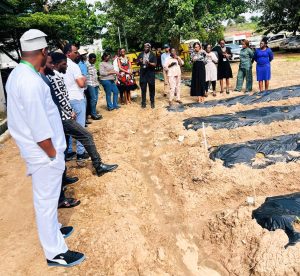
Demonstration on Value for Cultivation and Use (VCU) test, Abuja, Nigeria.

Rwanda’s agricultural transformation has prioritized improving seed systems to enhance food security and farmer livelihoods. The reliance on seed importation is gradually decreasing, with more efforts focusing on local seed production. The Rwanda hybrid maize seed industry is still young, facing challenges, like limited skills, land scarcity, climate change, outbreaks of pests and diseases, and low farmers’ awareness about the benefits of hybrid maize seed varieties, as many continue to grow open-pollinated, comparatively less productive varieties. These issues adversely affect seed quality, yield, and competitiveness in the market.

To help address these bottlenecks, IITACGIAR conducted a training on hybrid maize seed production for eight field technicians and two senior officers from the Rwanda Agriculture and Animal Resources Development Board (RAB), through a learning visit to IITA breeding and research facilities for knowledge sharing and better collaborative research endeavors.

The training took place in Nigeria at IITA headquarters in Ibadan, Oyo State and Ikenne station, Ogun State, where participants were exposed to the latest technologies in developing and maintaining parent lines of hybrid maize seed. The participants were shown the importance of maintaining the genetic purity of parent lines, which forms the basis for hybrid maize seed quality. They also learnt key practices such as proper isolation distance, strict roguing, timely detasseling, proper harvesting, seed processing, and storage that contribute to the overall seed quality.
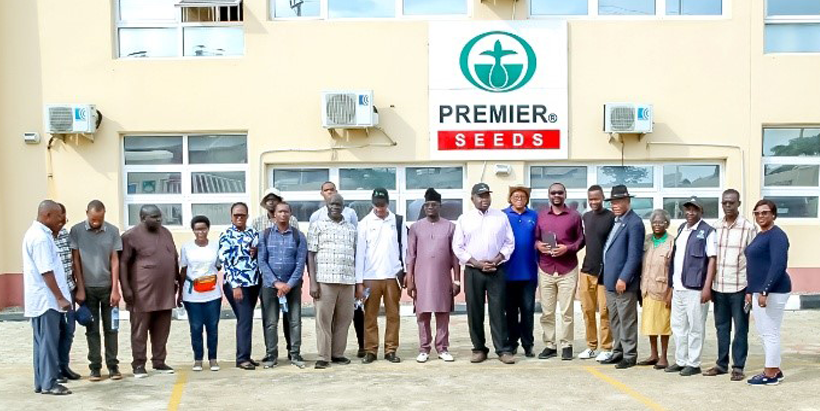
 The visit to Premier Seed in Kaduna state, Nigeria.
The visit to Premier Seed in Kaduna state, Nigeria.

They toured the IITA seed storage facility, which is designed with short-, medium-, and long-term storage capacity at low temperatures and a strict and adequate storage and pest management system. Standard operating procedures (SOPs) were emphasized for any operation to be carried out during seed production to reduce contamination and enhance compliance with regulatory standards.

The field visit to the Ikenne research station allowed the participants to understand how national trials are conducted by exposing the entries to different biotic (e.g., fall army worm infestation) and abiotic (e.g., drought tolerance) stresses. The most performing candidates are then selected for regional trials. “Enhancing the capacity of active players, especially research and certification agency staff, is a panacea for ensuring the success of an active seed value chain. Thus, the training will go a long way in improving quality seed delivery in Rwanda,” Dr Sam Ajala, IITA Plant Breeder, said.
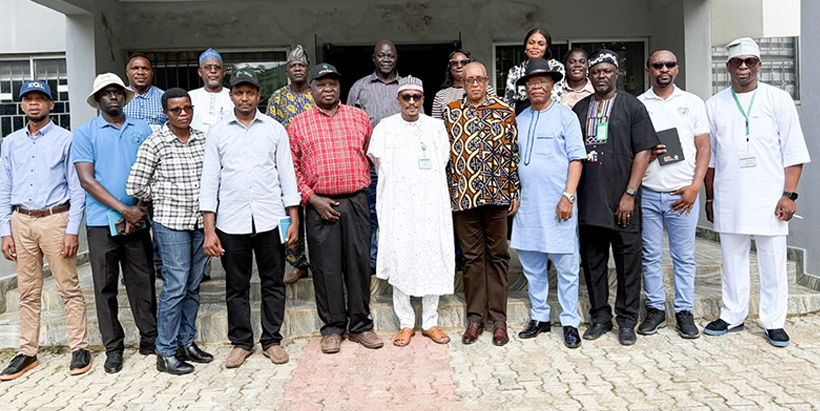
The Rwanda delegation with NASC DG Honorable Fatuhu Muhammed (m).

The RAB team also visited the National Agricultural Seed Council (NASC) in Abuja and two leading seed companies in Nigeria, namely, Premier Seed and Value Seeds in Zaria, where they shared experience in seed production, certification, and quality control. While at NASC, they interacted with Honorable Fatuhu Muhammed, NASC’s Director General, who stressed the need for knowledge sharing among Africans to address challenges facing the continent, including food security. The participants also had the opportunity to exchange with different heads of departments on seed certification and quality assurance, and the national agricultural seed policy as a tool for the regulatory framework for NASC operations. They were introduced to the seed codex, an electronic seed authentication tool developed by NASC to restore confidence in the seed system through tracking, traceability, and provision of quality seeds to the farmers.

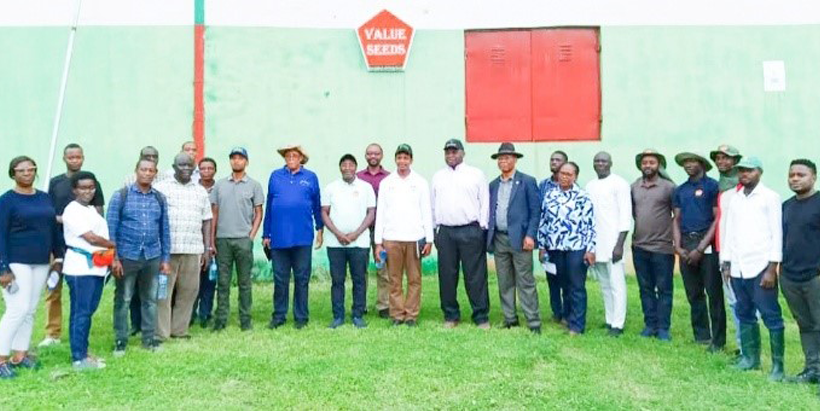
The visit to the seed companies in Zaria, Kaduna State, gave insights into the benefits of collaboration among key players in the seed sector. These seed companies work closely with the national research agency, international research organizations, including IITA, and the regulatory body to develop and deliver quality seed. Owing to this partnership, both Premier Seed and Value Seed have successfully released their own varieties that are currently being grown by farmers in different parts of Nigeria.
The visit to Value Seeds in Kaduna state, Nigeria.

“The training in Ibadan, Nigeria, was a significant moment of knowing and seeing in practice advances that will help improve the maize hybrid seed value chain in Rwanda. The advanced molecular laboratory at IITA can be used to build skills in our maize molecular breeding. Also, the molecular tool can be used to check the seed purity and maintain maize hybrid varieties, as seen at the National Agricultural Seed Council (NASC). The strong partnership between private seed companies and public research organizations, as Premier Seed Limited explained, can be key in improving the seed value chain in Rwanda. The seed tracker and codex can solve several problems in Rwanda’s seed sector. More importantly, the IITA-specific germplasm, such as fall armyworm-tolerant and provitamin A maize germplasm, can be introgressed locally for well-adapted maize varieties,” Dr Claver Ngaboyisonga, Cereal Program Coordinator at RAB, said.

The training was organized as part of the ongoing efforts to strengthen the technical capacity of RAB in hybrid maize seed production, quality control, and certification. This training was preceded by another training held earlier this year for six local seed companies on commercial seed production, emphasizing the quality of hybrid maize seed. The government of Rwanda invites entrepreneurs to invest in seed production and distribution to enable farmers to adopt new agricultural innovations and good practices that can contribute to increasing the productivity and incomes among smallholder farmers.

Contributed by Ritha Bumwe


Contributed by

Related news

No items found

Leave a Reply

Your email address will not be published. Required fields are marked *

Scroll to Top
Olaosebikan, Olamide

Olamide Deborah Nwanze is a Senior Research Associate specializing in gender mainstreaming research to inform participatory and inclusive breeding, variety development, and seed systems policies regarding root, tuber, and banana (RTB) crops in the International Institute of Tropical Agriculture Headquarters, Ibadan, Nigeria. She is a PhD candidate at the University of Ibadan and holds an MSc and B. Agric in Agricultural Extension and Rural Development. Olamide is a fellow of the African Women in Agricultural Research and Development – Gender Responsive Agricultural Systems Policy (AWARD-GRASP) and the Gender Responsive Researchers Equipped for Agricultural Transformation (GREAT). She seeks to apply her gender-mainstreaming learnings, gender-responsive research, and policy development, and review expertise to facilitate women, youth, children, and vulnerable social group’s access to and adoption of agricultural Innovations that guarantee food, nutrition, income, and livelihood security in Africa. Her current roles include mentoring research fellows, development of guides and training manuals, implementation and adaptation of gender frameworks and tools, value chain actors’ engagement as citizen science partners, policy review and redesign, data management, and analysis. Her current research explores mixed methods and participatory and interdisciplinary approaches to capture and highlight gender dynamics, needs, preferences, and challenges stakeholders face within the agricultural livelihood value chain to prioritize gender-inclusive strategies in breeding programs, policy design, and implementation.

At IITA, she contributes to the implementation of the CGIAR Accelerated Breeding Initiative and Genetic Innovation Programs; participatory and gender research within the NextGen CassavaHarvestPlusRTBFoods, and Tricot-ClimMob 1000Farms Projects; and gender knowledge communication via the G-LENS webinar series, video documentary, policy briefspublications, and blogs.


Recent publications

de Sousa, K., van Etten, J., Manners, R. Bello, A., Teeken, B., Olaosebikan, O., et al. 2024. The tricot approach: an agile framework for decentralized on-farm testing supported by citizen science. A retrospective. Agron. Sustain. Dev. 44, 8. https://doi.org/10.1007/s13593-023-00937-1

Madu, T., Onwuka, S., Nwafor, S., Onyemauwa, N., Ejechi, M., Ofoeze, M., Ukeje, B., Eluagu, C., Olaosebikan, O., Okoye, B., 2024. Gender-Inclusive Consumer Studies Improve Cassava Breeding in Nigeria in: Frontiers in Sociology, volume 9, number: 1224504, doi: 10.3389/fsoc.2024.1224504

Olaosebikan, O.; Bello, A.; Utoblo, O.; Okoye, B.; Olutegbe, N.; Garner, E.; Teeken, B.; Bryan, E.; Forsythe, L.; Cole, S.; Madu, T. 2023.  Stressors and Resilience within the Cassava Value Chain in Nigeria: Preferred Cassava Variety Traits and Response Strategies of Men and Women to Inform Breeding. Sustainability 15, 7837. https://doi.org/10.3390/su15107837

Okoye, B., Ofoeze, M., Ejechi, M., Onwuka, S., Nwafor, S., Onyemauwa, N., Ukeje, B., Eluagu, C., Obidiegwu, J.*, Olaosebikan, O., Madu, T.* 2023. Prioritizing preferred traits in the yam value chain in Nigeria: a gender situation analysis in: Frontiers in Sociology, volume 8, number: 1232626, pages 1 – 9, ISSN 2297-7775, 2023. https://www.frontiersin.org/articles/10.3389/fsoc.2023.1232626/full

Olaosebikan, O., Bello, A. A., de Sousa, K., Ndjouenkeu, R., Adesokan, M., Alamu, E. O., Agbona, A., van Etten, J., Kegah, F. N.*, Dufour, D., Bouniol, A., Teeken, B. 2023. Consumer acceptability of cassava gari-eba food products across cultural and environmental settings using the triadic comparison of technologies approach (tricot) in: Journal of the Science of Food and Agriculture,

Teeken, B., Olaosebikan, O., Bello, A. A., Madu, T.*, Cole, S. M. 2023. Qualitative assessment on the positionality and preferences of dyads in relation to cassava-related activities: working with tricot trial citizen scientists https://hdl.handle.net/10568/138326 Type: Manual

Bouniol, A., Ceballos, H., Bello, A. A., Teeken, B., Olaosebikan, O., Owoade, D., Agbona, A., Fotso Kuate, A., Madu, T.*, Okoye, B.*, Ofoeze, M.*, Nwafor, S.*, Onyemauwa, N.*, Adinsi, L.*, Forsythe, L., Dufour, D. 2023. Varietal impact on women’s labour, workload and related drudgery in processing root, tuber and banana crops: focus on cassava in sub-Saharan Africa in: Journal of the Science of Food and Agriculture, pages 1 – 25, ISSN 0022-5142,

Bello, A. A., Agbona, A., Olaosebikan, O., Edughaen, G., Dufour, D., Bouniol, A., Iluebbey, P., Ndjouenkeu, R.*, Rabbi, I. Y., Teeken, B. 2023. Genetic and environmental effects on processing productivity and food product yield: drudgery of women’s work in: Journal of the Science of Food and Agriculture, pages 1 – 32, ISSN 0022-5142, 5

Cavicchioli, M., Zimbiti, T., Teeken, B., Nwanze, D.O., Liani, M., Parkes, E. & Bello, A. 2023. IITA-Gender Responsive Breeding Training Report. Genetic Resources Center, IITA-HQ, Ibadan, 21-23 September, 2022. Ibadan, Nigeria: IITA, (34 p.).https://hdl.handle.net/10568/131368

Agbona, A. Peteti P., Teeken B., Olaosebikan O. Bello, A. A., Parkes, E., Rabbi, I. Y., Mueller, L., Egesi, C., Kulakow, P. 2022. Data Management in Multi-disciplinary African RTB Crop Breeding Programs. In: Williamson, H.F., Leonelli, S. (eds) Towards Responsible Plant Data Linkage: Data Challenges for Agricultural Research and Development. Springer, Cham. https://doi.org/10.1007/978-3-031-13276-6_5

Lora Forsythe, Pricilla Marimo, Sarah Mayanja, Olamide D. Olaosebikan, Esme Stuart, Bela Teeken, Benjamin Okoye, Tessy Madu, (2021). Cross-product Gender Analysis of RTBfoods Step 2 Gendered Food Mapping on RTB Products. Understanding the Drivers of Trait Preferences and the Development of Multi-user RTB Product Profiles, WP1. London, UK: RTBfoods Field Scientific Report, 30 p.

Teeken, B., Garner, E., Agbona, A., Balogun, I., Olaosebikan, O., Bello, A., Madu, T., Okoye, B., Egesi, C., Kulakow, P. and Tufan, H.A. 2021. Beyond “Women’s Traits”: Exploring How Gender, Social Difference, and Household Characteristics Influence Trait Preferences. Frontiers Sustainable Food Systems 5:740926. https://doi.org/10.3389/fsufs.2021.740926

Teeken, B., Agbona, A., Bello, A., Olaosebikan, O., Alamu, E., Adesokan, M., Awoyale, W., Madu, T., Okoye, B., Chijioke, U., Owoade, D., Okoro, M., Bouniol, A., Dufour, D., Hershey, C., Rabbi, I., Maziya‐Dixon, B., Egesi, C., Tufan, H. and Kulakow, P. (020. Understanding cassava varietal preferences through pairwise ranking of gari‐eba and fufu prepared by local farmer–processors. Int J Food Sci Technol. https://doi.org/10.1111/ijfs.14862

Bela Teeken, Olamide Olaosebikan, Ireti Balogun, Benjamin Okoye, Tessy Madu, Steven Cole, Abolore Bello, Elizabeth Parkes. (2020). Piloting the G+ customer and product profile tools for gender-responsive cassava breeding in Nigeria. Nigeria: International Institute of Tropical Agriculture (IITA). https://hdl.handle.net/20.500.11766/13000