
IITA joins push for gender-responsive climate change action in Tanzania
October 1, 2019
IITA in Tanzania, alongside other actors in the field of climate change, organized a session for members of Tanzanian Women Parliamentary Group (TWPG) to create awareness about the importance of gender responsive policies, plans, and strategies for climate change adaptation and mitigation. The parties, under the umbrella of the Tanzania Climate Smart Agriculture Alliance (TCSAA), organized the seminar on 4–5 September as part of efforts to address the disparate impacts of climate change on women.
 Women are disproportionately vulnerable to the effects of natural disasters and climate change when their rights and socioeconomic status are not equal to those of men. The World Bank estimates that the gender productivity gap in Africa is $105 million in Tanzania, $100 million in Malawi, and $67 million in Uganda. The Bank of America notes that achieving women’s equality could boost global GDP by up to 31%.
The seminar, among others, enhanced the knowledge of MPs on the critical role gender plays in implementing climate change actions to facilitate the formulation and implementation of gender sensitive policies, plans, and strategies at national and sub-national levels. It also created a platform to kick-start the process of the revision of the Tanzania’s Gender and Climate Change Action Plan.
The CGIAR Research Program on Climate Change, Agriculture and Food Security (CCAFS) provided financial support for organizing the meeting. Other partners included the Ministry of Health, Community Development, Gender, Elders and Children; Ministry of Agriculture; the TCSAA; Agricultural Non-State Actors Forum (ANSAF); CARE International (Tanzania Office); Forum on Climate Change (ForumCC), and IITA. IITA participated in the event as part of its Building Capacity for Resilient Food Security project in Tanzania led by Catherine Njuguna, IITA-EA Hub Communication Officer.
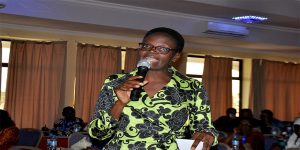
The Deputy Speaker, Hon. Dr Tulia Ackson (MP), officially opened the meeting, which took place in Dodoma City, the national capital of Tanzania. Ackson highlighted the key role women play in agriculture and the challenges they face in the advent of climate change.
“We are dealing with the issues of climate change every day in our constituencies. The rains are not coming on time. The farmers spend money on seeds and work on their farms but they get nothing by the end of the day. Women who take care of their families have the worst struggle. They work the most on the farms,” she noted.
Her remarks were reiterated by Hon. Margaret Sitta (MP) the Chair of the TWPG, who also chaired the meeting. Hon. Sitta thanked the organizers of the event and requested them to reach out to all Members of Parliament to increase their awareness on climate change. “We thank the organizers of this event for imparting to us this knowledge which will help us to know how to advise the Government on issues of climate change.”
By the end of the meeting, the group agreed to identify gender and climate change champions to advocate for the mainstreaming of gender and climate change into national and district development planning and budgeting. The champions will strengthen engagement with the MPs, relevant ministries, departments and agencies, District Executive Councils, CSOs, and other actors at different levels in the design and implementation of Climate Change Actions.
Climate change is currently the greatest challenge facing humanity across the world. The impacts of climate change in Tanzania include among others: higher temperatures, increase in frequency and magnitude of droughts and floods as well as rising sea levels. Current climate variability and change resulting in extreme weather events have already caused major economic losses in Tanzania, estimated at US$200 million per year for the agricultural sector alone.
The organizers of the meeting will work with the TWPG Chair and selected champions to ensure the decisions from the event are carried forward to support the country’s effort in addressing climate change.
TCSAA is a platform that brings together a broad group of actors including
the private sector, farmer organizations, international NGOs, academic and research organizations, faith based groups, and the media. Other partners include youth organizations, women groups, civil society, and individuals. Together they speak with one voice, build public and political will, and advocate for policy support in the fight against climate change in Tanzania.
Women are disproportionately vulnerable to the effects of natural disasters and climate change when their rights and socioeconomic status are not equal to those of men. The World Bank estimates that the gender productivity gap in Africa is $105 million in Tanzania, $100 million in Malawi, and $67 million in Uganda. The Bank of America notes that achieving women’s equality could boost global GDP by up to 31%.
The seminar, among others, enhanced the knowledge of MPs on the critical role gender plays in implementing climate change actions to facilitate the formulation and implementation of gender sensitive policies, plans, and strategies at national and sub-national levels. It also created a platform to kick-start the process of the revision of the Tanzania’s Gender and Climate Change Action Plan.
The CGIAR Research Program on Climate Change, Agriculture and Food Security (CCAFS) provided financial support for organizing the meeting. Other partners included the Ministry of Health, Community Development, Gender, Elders and Children; Ministry of Agriculture; the TCSAA; Agricultural Non-State Actors Forum (ANSAF); CARE International (Tanzania Office); Forum on Climate Change (ForumCC), and IITA. IITA participated in the event as part of its Building Capacity for Resilient Food Security project in Tanzania led by Catherine Njuguna, IITA-EA Hub Communication Officer.
The Deputy Speaker, Hon. Dr Tulia Ackson (MP), officially opened the meeting, which took place in Dodoma City, the national capital of Tanzania. Ackson highlighted the key role women play in agriculture and the challenges they face in the advent of climate change.
“We are dealing with the issues of climate change every day in our constituencies. The rains are not coming on time. The farmers spend money on seeds and work on their farms but they get nothing by the end of the day. Women who take care of their families have the worst struggle. They work the most on the farms,” she noted.
Her remarks were reiterated by Hon. Margaret Sitta (MP) the Chair of the TWPG, who also chaired the meeting. Hon. Sitta thanked the organizers of the event and requested them to reach out to all Members of Parliament to increase their awareness on climate change. “We thank the organizers of this event for imparting to us this knowledge which will help us to know how to advise the Government on issues of climate change.”
By the end of the meeting, the group agreed to identify gender and climate change champions to advocate for the mainstreaming of gender and climate change into national and district development planning and budgeting. The champions will strengthen engagement with the MPs, relevant ministries, departments and agencies, District Executive Councils, CSOs, and other actors at different levels in the design and implementation of Climate Change Actions.
Climate change is currently the greatest challenge facing humanity across the world. The impacts of climate change in Tanzania include among others: higher temperatures, increase in frequency and magnitude of droughts and floods as well as rising sea levels. Current climate variability and change resulting in extreme weather events have already caused major economic losses in Tanzania, estimated at US$200 million per year for the agricultural sector alone.
The organizers of the meeting will work with the TWPG Chair and selected champions to ensure the decisions from the event are carried forward to support the country’s effort in addressing climate change.
TCSAA is a platform that brings together a broad group of actors including
the private sector, farmer organizations, international NGOs, academic and research organizations, faith based groups, and the media. Other partners include youth organizations, women groups, civil society, and individuals. Together they speak with one voice, build public and political will, and advocate for policy support in the fight against climate change in Tanzania.
Hon. Dr Tulia Ackson (MP) while giving opening remarks.
Contributed by
Recent stories
No items found