
IITA partners with Nigerian Breweries for Olokemeji Reforestation
April 2, 2021
Every year, the world loses 10 million hectares of forest to indiscriminate poaching activities and the felling of trees. The depletion of our natural resources and increased emission of greenhouse gases contribute to climate change.
The IITA Forest Center, the Nigerian Breweries, and the Ogun State Ministry of Forestry are undertaking a 10-year project to reforest the Olokemeji Forest Reserve in Ogun State. The Forest Reserve is one of the largest in southwest Africa, covering 618 hectares of land. Community members have encroached on this Forest area by clearing different portions of the land for various farming activities. The project aims to sensitize and encourage the community members and other stakeholders to reforest the area.
 A community entrance and familiarization event took place in March to launch the initial phase of the project. The project aims to provide community members with training on environmental conservation and multiple income generation sources through school conservation clubs, bee-keeping, and vegetable and herb gardening. These will help engender a sense of ownership over the project among the locals.
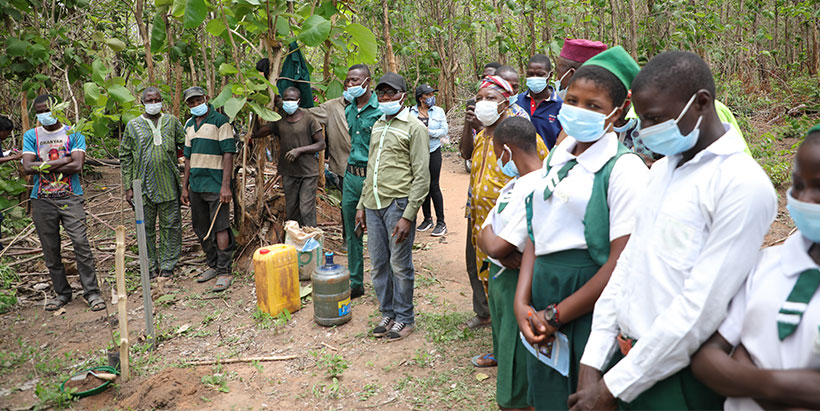
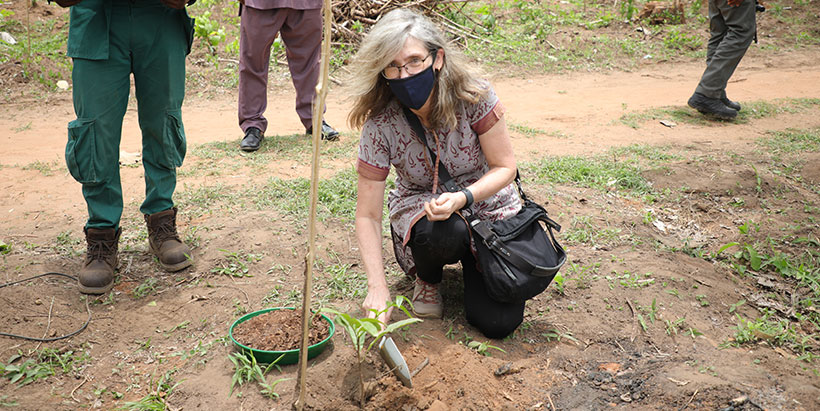
As part of International Forest Day celebrations, the project launched its first activities by planting trees in selected portions of the forest reserve. Men and women of the Olokemeji community, school children, and staff representatives from IITA participated in the activity. Hilde Koper, IITA’s Deputy Director-General for Corporate Services, appreciated everyone present and emphasized the need for everyone’s cooperation to improve the forests for healthy living. Sylvia Oyinlola, Head Administration, IITA West Africa hub, captioned the goal of the day’s reforestation activity as ‘Reforest for a better forest for a better world.’
A community entrance and familiarization event took place in March to launch the initial phase of the project. The project aims to provide community members with training on environmental conservation and multiple income generation sources through school conservation clubs, bee-keeping, and vegetable and herb gardening. These will help engender a sense of ownership over the project among the locals.
As part of International Forest Day celebrations, the project launched its first activities by planting trees in selected portions of the forest reserve. Men and women of the Olokemeji community, school children, and staff representatives from IITA participated in the activity. Hilde Koper, IITA’s Deputy Director-General for Corporate Services, appreciated everyone present and emphasized the need for everyone’s cooperation to improve the forests for healthy living. Sylvia Oyinlola, Head Administration, IITA West Africa hub, captioned the goal of the day’s reforestation activity as ‘Reforest for a better forest for a better world.’
 IITA Forest Center’s Ademola Ajayi, speaking on the effects of deforestation and the need to use our forests sustainably, said, “The unbearable heat we feel lately are effects of cutting down forest trees. Animals, insects, and birds that should help pollinate our plants migrate from our forests when their habitats are threatened. People suffer from diseases previously unknown to man because we upset nature’s balance by various deforestation activities.” He added that the way to use nature’s resources is to use them sustainably, “If you cut a tree, you should replant three,” he said.
 In an earlier town hall meeting with community members and other stakeholders, Tayo Adelaja, Nigerian Breweries Public Affairs Manager West/MidWest, affirmed his company’s commitment and responsibility towards the project. He asked for everyone’s cooperation to bring about the project’s success, saying that the fruitful outcomes of the first phase would determine their continued collaboration for the project’s sustainability.
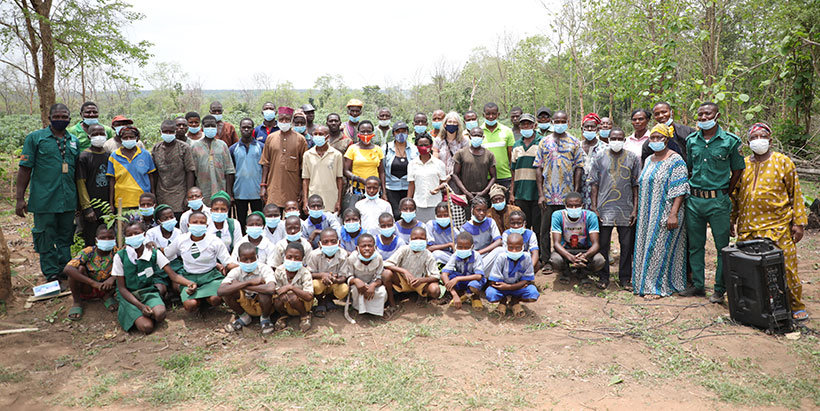 Apart from planting trees to restore the degraded land, the project will provide jobs for community members trained in various aspects of biodiversity conservation and forest protection. Members of the local communities themselves will be in charge of maintaining the project. The sustainability course was especially entrusted to the children who would be members of School Conservation Clubs where they would interact with Club members from other schools and be more open to the world of conservation. They were enjoined to be ambassadors of the program and transfer the same knowledge of conservation gained to their peers and others.
Some Olokemeji Community members and pupils awaiting the tree planting exercise.
Hilde Koper participating in the tree-planting.
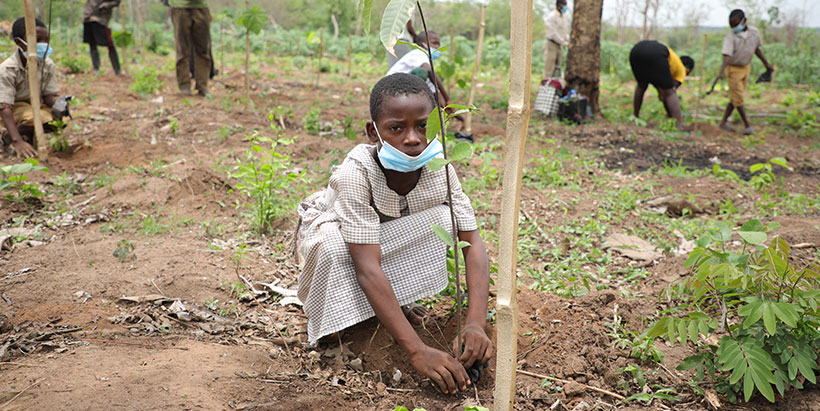
Pupil planting a tree alongside community members.
Stakeholders of the Olokemeji reforestation project.
Contributed by
Recent stories
No items found