
IITA–CGIAR organized a scientific seminar on 27 August, themed “Genome engineering of African staple food crops.” The event, anchored by IITA Director of the West Africa Hub, Michael Abberton, showcased the pioneering research work of IITA Plant Transformation Specialist, Jaindra Tripathi.
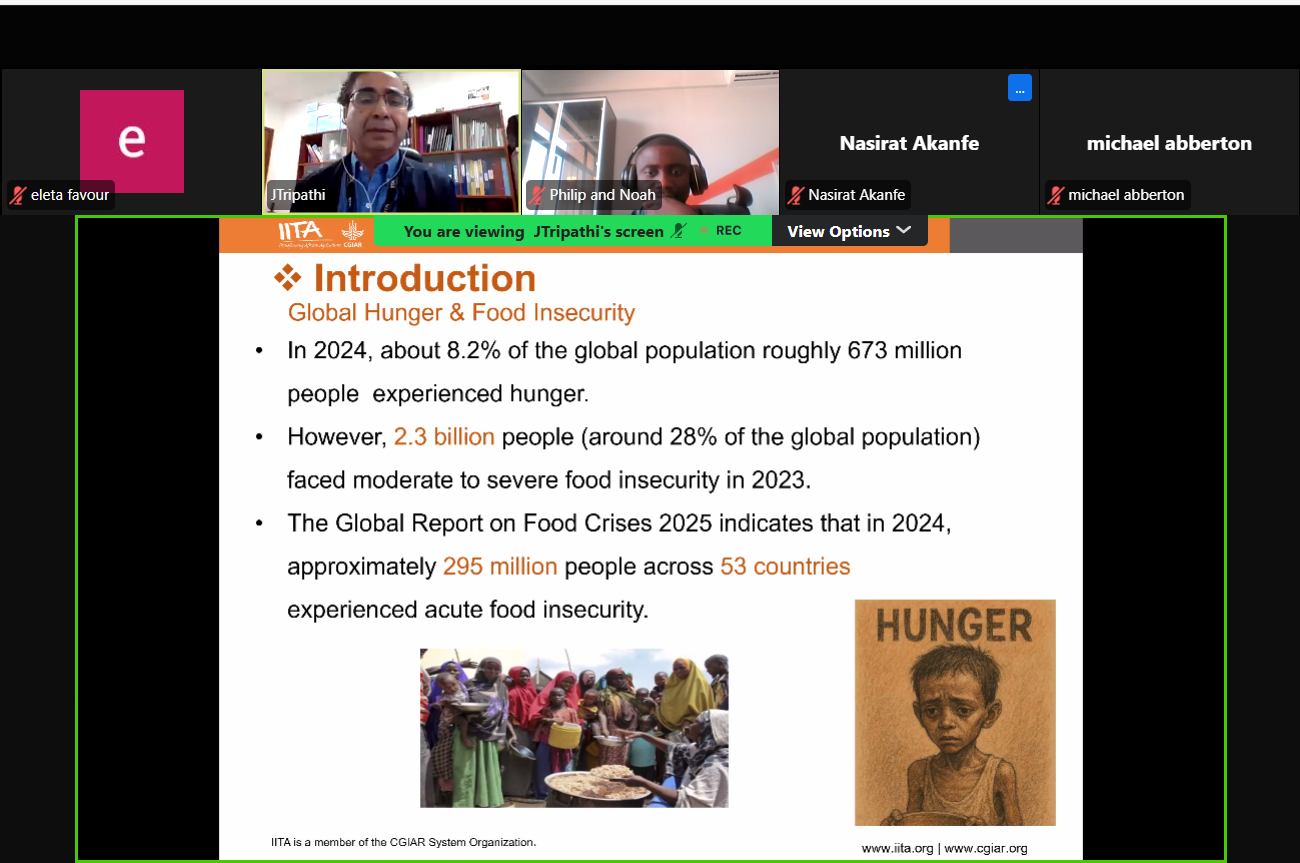
In his presentation, Tripathi highlighted the urgency of addressing global hunger and food insecurity, particularly in Africa, where the situation is increasingly critical. He noted that hunger on the continent has been rising since 2010, with approximately 61% of Africans currently food insecure. He added that 38% of the world’s hungry people live in Africa, and 20% of the continent’s population is undernourished. Compounding the problem, the cost of a healthy diet in Africa increased by 53% between 2020 and 2021.
Tripathi’s research addresses production constraints in banana, one of Africa’s key staple crops. He explained that banana production suffers up to 50% losses globally due to devastating diseases, such as Fusarium wilt and other pathogens. In response, his team has made significant strides in advancing plant transformation and genome editing technologies to combat these challenges.
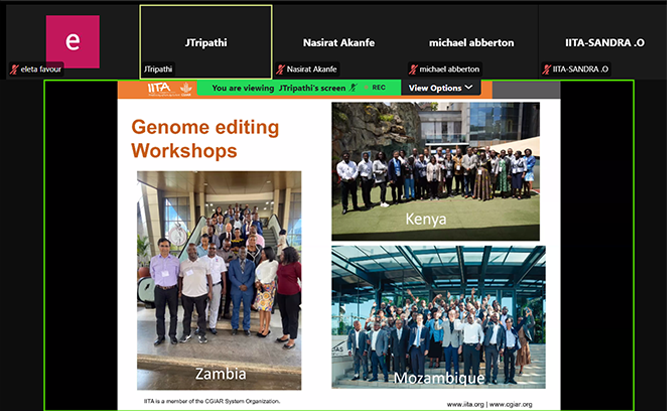
Highlighting his notable achievements, he mentioned the development of embryogenic cells of banana cultivars; establishment of transformation systems for tropical crops like banana, yam, and cassava; application of genome editing approaches to produce disease-resistant bananas; generation of mutants, molecular characterization, and phenotyping of edited lines; and transient expression of transgenes in tropical crops.
Tripathi emphasized that his research continues exploring transgenic and genome editing approaches to strengthen crop resilience. Sharing the importance of his genome editing work on crops like banana, yam, and bambara groundnut, Tripathi mentioned that genome editing is a precise, powerful, and sustainable solution to food production challenges. He revealed that tolerant mutant banana plants developed under these technologies are currently being multiplied for further evaluation.
Looking ahead, Dr Tripathi outlined a series of future research activities. For Banana improvement, there is an evaluation of transgene-free genome-edited banana events in Kenya and Rwanda, conducting field trials of stacked-gene transgenic banana lines, and assessing the performance of genome-edited lines against Fusarium wilt under controlled conditions.
To improve yams, there are plans to develop short-stature yam varieties through genome editing and expand to other crops by establishing genome editing systems for Bambara groundnut, cowpea, maize, and enset.
Regarding knowledge sharing and capacity development, Tripathi plans to publish findings in high-impact, peer-reviewed journals, present at international conferences, and continue mentoring young scientists, MSc, and PhD students. He also plans to strengthen the expertise of National Agricultural Research Systems (NARS). He also shared the importance of resource mobilization and partnerships to sustain and expand this groundbreaking research, noting that securing funding will accelerate progress.
The seminar reaffirmed IITA’s commitment to leveraging cutting-edge science and innovation to contribute to the transformation of African agriculture and the fight against hunger.
Contributed by Ochuwa Favour Daramola
Contributed by
Recent stories