
In the heart of Zeze Secondary School in Kasulu District Council, in Kigoma Region, Tanzania, Patrice Nyembe stands as a production teacher, living and breathing the philosophy of self-reliance. He knows that in the tender years of childhood, the seeds of poverty or riches, industry or idleness, good or evil could be sown through the habits that children are taught. And so he believes in cultivating the right habits from an early age. His conviction? Agriculture. He sees agriculture as the key to self-reliance, provided students have the proper skills and knowledge.
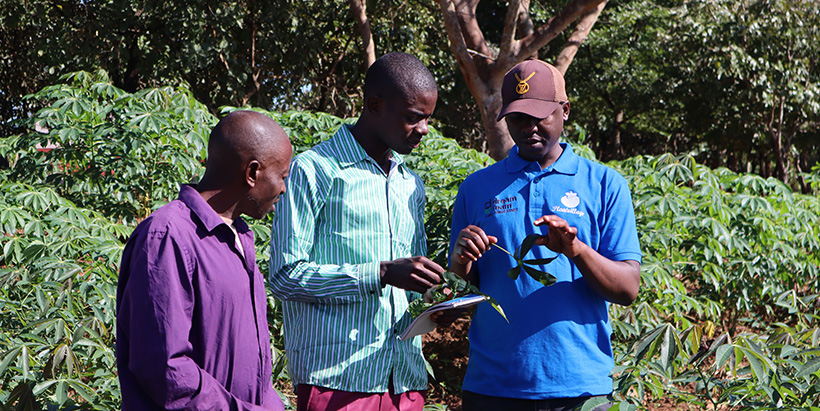
One day, Nyembe received news that became the beginning of a new revelation. IITA-CGIAR and the Tanzania Agriculture Research Institute (TARI) were distributing improved cassava varieties through the Muhogo Bora project and establishing demonstration plots to showcase the improved cassava varieties. An opportunity blossomed in his mind like a well-tended crop. He envisioned a future of increased crop productivity and food security for the school.
Nyembe recounted, “Last year, we received cassava seeds from TARI. Fortunately, the headmistress granted me permission to prepare the farm and plant the seeds with the students and with the expertise from TARI. This initiative has truly encouraged us, and I believe it will increase the school’s income and ensure we have sufficient food.”
The farming fervor spread like wildfire among the students at Zeze Secondary. They were captivated by the new farming skills, a departure from the conventional practices handed down through generations that yielded meager crops.
School Head Boy Shirikisho Erenest confessed, “In our household, we do not adhere to good agronomic practices (GAPs). I am fortunate to have acquired this valuable knowledge in our school. And I commit to sharing this knowledge with my community, particularly the science of applying fertilizer appropriately to cassava. My ambition is to become an agricultural expert in solving crop diseases.”
Shirikisho emphasized that this new agricultural experience has introduced him to new horizons of cassava knowledge. School Head Girl Regina Joram echoed this sentiment, explaining cassava’s significance in their daily lives.
“At school, we learn about self-reliance, and the agricultural knowledge I receive here is immensely beneficial. We have learned how to distinguish between the local and improved cassava varieties, and I have witnessed the increased productivity of the new varieties,” Regina exclaimed.
Regina considers herself a messenger of good news about the improved cassava varieties and the GAPs to her parents and fellow compatriots. She recognized that this knowledge was not just a boon for her future; it would increase crop productivity and provide a source of income.
Magreth Jacob, the Headmistress of Zeze Secondary School, was impressed with the Muhogo Bora project’s efforts, noting that the school community marveled at the contributions made by this cassava-growing initiative. Early maturing cassava varieties have transformed the lives of students. They now had timely access to food, stationery, and the means to pay water bills. These benefits especially ease the burdens of young girls hailing from financially disadvantaged families.
Muhogo Bora is a three-year project executed by Cornell University College of Agriculture and Life Sciences and implemented by IITA, TARI, and Local Government Authorities in Tanzania. Its mission is to develop gender-responsive cassava seed systems in Tanzania, focusing on the Western Zone. The goal is to ensure that women, youth, and marginalized rural farmers participate as cassava seed entrepreneurs (CSEs) and thrive. In Zeze Secondary School, this vision has great hope of bearing fruit, with one cassava at a time.
Contributed by Rashid Hadi
Contributed by
Recent stories