
The Muhogo Bora (MB) project brought together 28 regional and local government authorities comprising Regional Agricultural Advisors (RAAs); District Agricultural, Irrigation and Cooperative Officers (DAICOs); Regional Community Development Officers (RCDOs); and District Community Development Officers (DCDO) at a workshop held on 16 August at Nazareth social hall in Tabora Region, Tanzania.
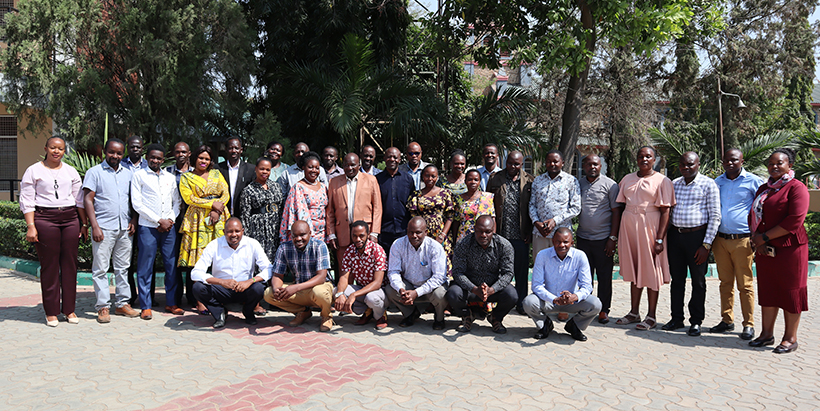
The workshop’s goal was to share with the government officials the developed, modified socially inclusive model for recruitment of cassava seed entrepreneurs (CSEs) for discussion and feedback provision and to pilot the model with farmers to determine its feasibility for the selection of CSEs for cohort II (2022 recruitment). This was important for ownership of the model as key stakeholders in the cassava value chain, whose influence would enable the selection of the right farmers, thus contributing to the project’s outcome of enhancing the participation of rural women, youth, and other marginalized farmers from geographically underserved regions as CSEs.
In his remarks, the RAA of Tabora, Modest Kaijage, emphasized the importance of improved cassava seeds and requested that workshop attendees move forward and get the right CSEs. He noted that if farmers produced more cassava, the market would be available, and people would have food security.
“I believe everyone understands the importance of cassava as a commercialized crop like other crops. Through this workshop, I anticipate that we will look at weaknesses that emerged during the implementation of the BEST cassava project model, which had low inclusion of youth and women in seed entrepreneurship to create a friendly environment to improve their livelihood,” he said.
Millicent Liani (IITA Gender Postdoctoral Fellow) shared insights on gender concerns in CSE work based on lessons from the BEST Cassava gender study. After that, she presented the modified CSE selection criteria highlighting the need to focus on specific personal attributes of potential CSEs, such as those who are hardworking, interested in CSE work, and trusted by the community.
Participants were divided into three regional groups to provide recommendations to improve the model, which they presented at the plenary. Nonetheless, the MB team also shared insights on improved varieties, the process of seed multiplication, schemes of cassava seed systems in Tanzania, and the use of digital agronomic tools.
In an interview, the RAA of Kigoma, Joseph Rubuye, noted that these efforts would enhance employment opportunities for many youths and increase family incomes for women engaged in agricultural practices. “I hope that the training offered by Muhogo Bora and TOSCI to cassava seed growers will assist them in recognizing agriculture as a business,” he remarked.
In his remarks, the Centre Director of TARI-Tumbi in Tabora, Dr Emmanuel Mrema, observed: “Empowering and promoting youth and women is considered one of the project goals to reduce poverty. Women play a vital role in farm-related activities such as managing farms, spending more time during postharvest activities, thus contributing more to rural economic development.”
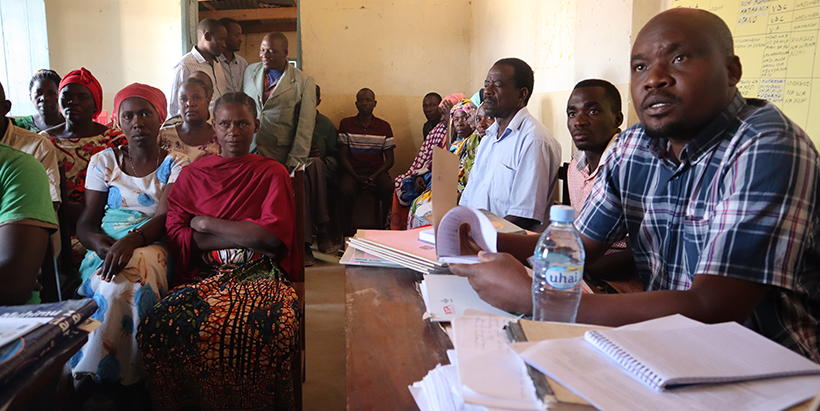
On 17 and 18 August, the Muhogo Bora team visited the Kigwa Ward in Uyui District, Tabora Region. They met with ward committee leaders and smallholder farmers to create awareness about the project, improved cassava varieties, and the plans for the second recruitment of CSEs and piloting of the model. During the meeting, most attendees were more enthusiastic about the seed business.
“I am really pleased with the Muhogo Bora project, and I’m eager to become a CSE if I get the chance. I hope that even my fellow villagers will accept this positively since it is a good thing that can benefit all of us,” said Johari Saidi, a 27-year-old farmer from Kigwa Ward.
Contributed by Hadi Rashid and Millicent Liani
Contributed by
Recent stories