
National agency to integrate AKILIMO tools into national extension package
August 31, 2020
Nigeria’s National Agricultural Extension and Research Liaison Services (NAERLS) is in talks with the African Cassava Agronomy Initiative (ACAI) project to integrate AKILIMO into the government extension package in Nigeria. NAERLS is one of the 18 national agricultural research institutes (NARIs) under the Federal Ministry of Agriculture and Rural Development (FMARD).
NAERLS is responsible for development, collation, evaluation, and dissemination of proven agricultural innovations as well as research on extension methodologies and policy. As part of NAERLS’s core objectives to adopt the multidisciplinary approach to problem-solving, the integration of AKILIMO tools in extension services in Nigeria will ensure the adoption of effective agronomic recommendations in farming practices.
 The IITA-implemented ACAI project developed the AKILIMO decision support tools that provide cassava agronomy recommendations to help cassava farmers optimize their production and income from growing cassava. The advice covers several use cases such as tailored fertilizer recommendation for cassava, six steps to cassava weed management and the best planting practices, intercropping cassava with sweet potato in Tanzania and maize in Nigeria, scheduling cassava planting and harvesting for sustainable and consistent production of cassava, and optimizing the amount and quality of starch in the cassava roots.
NAERLS Assistant Director for Research, Planning, Monitoring and Evaluation Prof. Christogonus K. Daudu met with ACAI staff, including Christine Kreye, Theresa Ampadu-Boakye, and Thompson Ogunsanmi to discuss how to integrats AKILIMO into the national extension package. The integration with NAERLS will involve the Federal Department of Agricultural Extension Services (FDAES) of FMARD.
Prof Daudu said the Institute is interested in working with all AKILIMO use cases and recommendations. He pointed out that the agronomy advice for getting the optimum return on investment through intercropping cassava and maize could be a starting point because of an ongoing AGRA-funded project in Niger and Kaduna states.
ACAI and NAERLS also discussed the need for a working group, with members selected from ACAI, NAERLS/FMARD, and NCRI, to review the existing cassava manual and consider how to integrate agronomy advice content from AKILIMO.
More discussion between ACAI and NAERLS included the integration of AKILIMO into the national helpline and NAERLS website to complement an interactive voice response (IVR) system where farmers make direct calls, which NAERLS resource persons physically operate via text messages.
ACAI is discussing the signing of an agreement with NAERLS in conjunction with other government agencies such as FDAES to facilitate collaboration on developing an agronomy knowledge base and the dissemination of AKILIMO tools. Long-term plans include working on incorporating fertilizer recommendations and other AKILIMO recommendations in the extension agents’ advisory pack.
The IITA-implemented ACAI project developed the AKILIMO decision support tools that provide cassava agronomy recommendations to help cassava farmers optimize their production and income from growing cassava. The advice covers several use cases such as tailored fertilizer recommendation for cassava, six steps to cassava weed management and the best planting practices, intercropping cassava with sweet potato in Tanzania and maize in Nigeria, scheduling cassava planting and harvesting for sustainable and consistent production of cassava, and optimizing the amount and quality of starch in the cassava roots.
NAERLS Assistant Director for Research, Planning, Monitoring and Evaluation Prof. Christogonus K. Daudu met with ACAI staff, including Christine Kreye, Theresa Ampadu-Boakye, and Thompson Ogunsanmi to discuss how to integrats AKILIMO into the national extension package. The integration with NAERLS will involve the Federal Department of Agricultural Extension Services (FDAES) of FMARD.
Prof Daudu said the Institute is interested in working with all AKILIMO use cases and recommendations. He pointed out that the agronomy advice for getting the optimum return on investment through intercropping cassava and maize could be a starting point because of an ongoing AGRA-funded project in Niger and Kaduna states.
ACAI and NAERLS also discussed the need for a working group, with members selected from ACAI, NAERLS/FMARD, and NCRI, to review the existing cassava manual and consider how to integrate agronomy advice content from AKILIMO.
More discussion between ACAI and NAERLS included the integration of AKILIMO into the national helpline and NAERLS website to complement an interactive voice response (IVR) system where farmers make direct calls, which NAERLS resource persons physically operate via text messages.
ACAI is discussing the signing of an agreement with NAERLS in conjunction with other government agencies such as FDAES to facilitate collaboration on developing an agronomy knowledge base and the dissemination of AKILIMO tools. Long-term plans include working on incorporating fertilizer recommendations and other AKILIMO recommendations in the extension agents’ advisory pack.
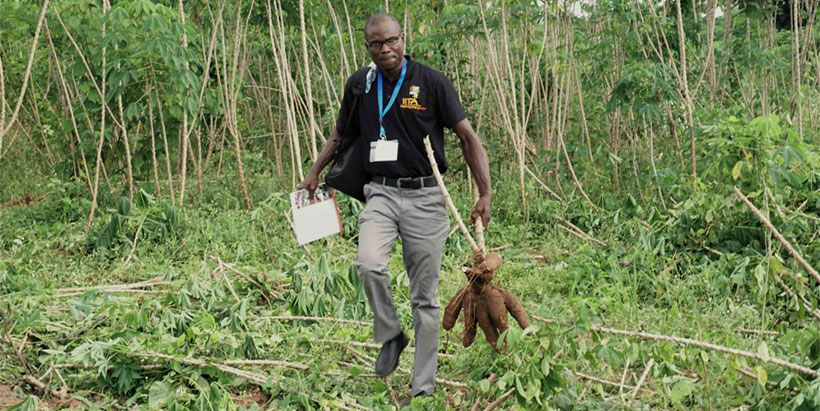
An extension agent conducting yield assesment in a trial plot managed using AKILIMO recommendations.
 AKILIMO tools provide recommendations that help farmers maximize their return on their cassava investments.
Contributed by
Recent stories
No items found