
New study: Use of genome editing confers resistance to Banana Xanthomonas wilt (BXW) disease
June 4, 2021
Disease-resistant varieties developed through genome editing are an effective strategy for managing diseases in food crops, a new IITA study shows.
The study shows that recent advances in CRISPR/Cas-based genome editing can accelerate banana improvement. The study, published in May in the Plant Biotechnology Journal, was conducted at IITA-Nairobi between 2019 and 2020.
‘‘It is urgent to close the yield gap in staple crops and enhance food production to feed the world. The application of genome editing can improve agricultural productivity, thus boosting food security,’’ says Leena Tripathi, the lead author.
The researchers used CRISPR/Cas9 based genome editing to knock down the DMR6 Orthologue in banana for developing resistance to Banana Xanthomonas Wilt (BXW) disease.
 They discovered that targeted mutations in the DMR6 gene sequence confer enhanced resistance to bacterial disease and that knocking out one DMR6 gene has no detrimental impact on plant growth.
The study found that there are multiple DMR6 gene sequences in banana. ‘‘The differential expression through qRT-PCR confirmed that expression of the Musa DMR6 gene is activated during pathogen-infection in the susceptible banana cultivar,’’ Tripathi notes.
The availability of banana reference genome sequences and the CRISPR/Cas9-editing system developed at IITA motivated Tripathi and her team to develop disease-resistant banana by precisely editing the endogenous genes.
‘‘After establishing a genome-editing tool for banana in our laboratory, we started focusing on disease resistance, particularly BXW disease, which is one of the most devastating diseases affecting banana production in East and Central Africa,” she continues.
“All the cultivated banana varieties are susceptible to BXW disease. Overall economic losses from BXW were estimated at US$2-8 billion over a decade,’’ Tripathi explains.
Food security experts say the emphasis in Africa, unlike other parts of the world, should be on banana rather than cereals since it is one of the main crops used for staple food and in income generation.
Investment in the genetic improvement of banana holds excellent prospects for improving food security as these crops feed more people per unit area of production than other staple crops.
Genome editing offers cost-effective strategies for developing improved varieties of banana resistant to multiple diseases. ‘‘Genome editing technology can help banana farmers in Africa beat economic losses from BXW,’’ states the study.
They discovered that targeted mutations in the DMR6 gene sequence confer enhanced resistance to bacterial disease and that knocking out one DMR6 gene has no detrimental impact on plant growth.
The study found that there are multiple DMR6 gene sequences in banana. ‘‘The differential expression through qRT-PCR confirmed that expression of the Musa DMR6 gene is activated during pathogen-infection in the susceptible banana cultivar,’’ Tripathi notes.
The availability of banana reference genome sequences and the CRISPR/Cas9-editing system developed at IITA motivated Tripathi and her team to develop disease-resistant banana by precisely editing the endogenous genes.
‘‘After establishing a genome-editing tool for banana in our laboratory, we started focusing on disease resistance, particularly BXW disease, which is one of the most devastating diseases affecting banana production in East and Central Africa,” she continues.
“All the cultivated banana varieties are susceptible to BXW disease. Overall economic losses from BXW were estimated at US$2-8 billion over a decade,’’ Tripathi explains.
Food security experts say the emphasis in Africa, unlike other parts of the world, should be on banana rather than cereals since it is one of the main crops used for staple food and in income generation.
Investment in the genetic improvement of banana holds excellent prospects for improving food security as these crops feed more people per unit area of production than other staple crops.
Genome editing offers cost-effective strategies for developing improved varieties of banana resistant to multiple diseases. ‘‘Genome editing technology can help banana farmers in Africa beat economic losses from BXW,’’ states the study.
 This study demonstrates the application of CRISPR/Cas9 for crop improvement with an important trait—disease resistance. It also confirms the availability of expertise and skills to apply genome editing for crop improvement in Nairobi, Kenya.
This study was supported by CGIAR Program for Roots, Tubers and Bananas (RTB).
RTB notes that roots, tubers, and bananas are a critical source of food, nutrition, animal feed, and cash income, whose production leads to an estimated annual farm-gate value of US$339 billion globally.
This study demonstrates the application of CRISPR/Cas9 for crop improvement with an important trait—disease resistance. It also confirms the availability of expertise and skills to apply genome editing for crop improvement in Nairobi, Kenya.
This study was supported by CGIAR Program for Roots, Tubers and Bananas (RTB).
RTB notes that roots, tubers, and bananas are a critical source of food, nutrition, animal feed, and cash income, whose production leads to an estimated annual farm-gate value of US$339 billion globally.
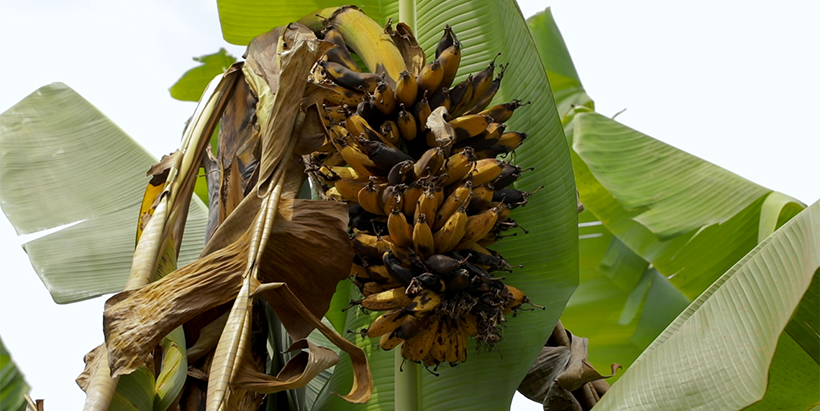
Banana bacterial wilt leads to premature ripening of the banana fruit.
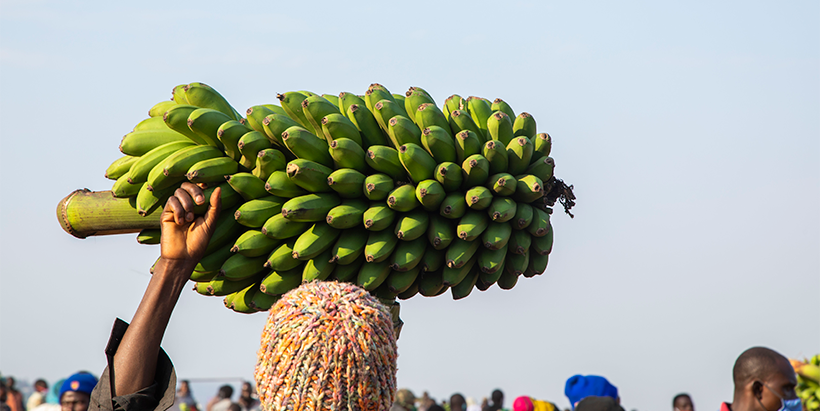
Healthy bananas, not infected with BXW.
Contributed by
Recent stories
No items found