
TAAT embarks on training for fiduciary staff
August 30, 2018
To ensure effective Financial and Procurement Management among the different Value Chain and Enabler Compacts, the Technologies for African Agricultural Transformation (TAAT) program conducted a two-day training on the fiduciary responsibilities of the implementing institutions towards the achievement of the program’s objectives. The training was held 31 July to 1 August at the IITA campus in Ibadan.
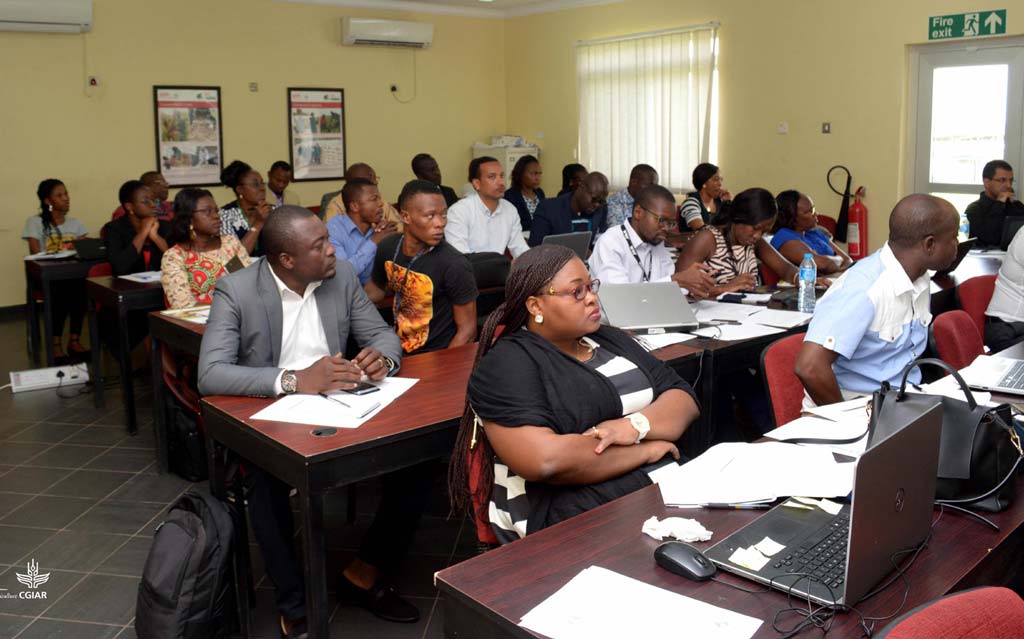 The 33 participants represented various implementing institutions including the International Crops Research Institute for the Semi-Arid Tropics (ICRISAT), International Water Management Institute (IWMI), International Center for Agricultural Research in the Dry Areas (ICARDA), International Center for Tropical Agriculture (CIAT), International Livestock Research Institute (ILRI), International Potato Center (CIP), Forum for Agricultural Research in Africa (FARA), African Agricultural Technology Foundation (AATF), Africa Rice Center (AfricaRice), International Fertilizer Development Center (IFDC), and IITA.
In his opening remarks, IITA Director, Development and Delivery Office, Alfred Dixon, spoke on the implementation of the TAAT program and the expectations of the African Development Bank (AfDB). He explained that AfDB has financial and procurement procedures that must be followed for effective implementation of each of the funded projects. He therefore urged all participants to take advantage of the training to ensure that all their fiduciary activities are in line with the Bank’s requirements.
The TAAT Program Coordinator, Chrys Akem, gave an overview of the TAAT Program as part of the Feed Africa strategy of the AfDB aimed at transforming agriculture and scaling up agribusiness opportunities in key agricultural commodity value chains for inclusivity, sustainability, and nutritional security on the continent.
Akem explained that TAAT aims to improve the livelihoods of more than 160 million Africans who are food insecure and malnourished by raising agricultural productivity. TAAT is expected to lead to 120 million tons of additional raw food production per year and contribute to lifting about 40 million people out of poverty. TAAT is also working towards moving African production much higher on the value chain with agribusinesses producing and selling processed goods and providing markets for African farmers. The TAAT Program Accountant, Seyi Fashokun, gave a presentation about the need for participants to perform their duties in the different compacts of the program to effectively manage program funds. He noted that AfDB and other donors such as the Bill & Melinda Gates Foundation aim to achieve value for money, economy, efficiency, effectiveness, and equity in the disbursement of funds. More importantly, he cited the 3Cs of Compliance, Communication, Commitment and 3Ts of Trust, Teamwork, and Truth as required tools for the success of financial management.
Fashokun also highlighted the general principle of “eligible expenditures,” explaining that all funds spent must be justified in line with planned and approved activities. The Program Accountant also mentioned internal controls as a vital tool for financial management and added that the essence of the training is to ensure that finance staff carried out their activities in line with the Bank’s financial management guidelines.
During his presentation, TAAT Program Procurement Specialist Monsuru Bakare gave an overview of the AfDB procurement requirements stating that procurement of goods, works, and the acquisition of consulting services financed by the Bank for the program will be carried out in accordance with their procurement framework.
He further stated that the Bank’s procurement methods as contained in the Protocol of Agreement will be used under the program as an outcome of the fiduciary risk assessment.
The 33 participants represented various implementing institutions including the International Crops Research Institute for the Semi-Arid Tropics (ICRISAT), International Water Management Institute (IWMI), International Center for Agricultural Research in the Dry Areas (ICARDA), International Center for Tropical Agriculture (CIAT), International Livestock Research Institute (ILRI), International Potato Center (CIP), Forum for Agricultural Research in Africa (FARA), African Agricultural Technology Foundation (AATF), Africa Rice Center (AfricaRice), International Fertilizer Development Center (IFDC), and IITA.
In his opening remarks, IITA Director, Development and Delivery Office, Alfred Dixon, spoke on the implementation of the TAAT program and the expectations of the African Development Bank (AfDB). He explained that AfDB has financial and procurement procedures that must be followed for effective implementation of each of the funded projects. He therefore urged all participants to take advantage of the training to ensure that all their fiduciary activities are in line with the Bank’s requirements.
The TAAT Program Coordinator, Chrys Akem, gave an overview of the TAAT Program as part of the Feed Africa strategy of the AfDB aimed at transforming agriculture and scaling up agribusiness opportunities in key agricultural commodity value chains for inclusivity, sustainability, and nutritional security on the continent.
Akem explained that TAAT aims to improve the livelihoods of more than 160 million Africans who are food insecure and malnourished by raising agricultural productivity. TAAT is expected to lead to 120 million tons of additional raw food production per year and contribute to lifting about 40 million people out of poverty. TAAT is also working towards moving African production much higher on the value chain with agribusinesses producing and selling processed goods and providing markets for African farmers. The TAAT Program Accountant, Seyi Fashokun, gave a presentation about the need for participants to perform their duties in the different compacts of the program to effectively manage program funds. He noted that AfDB and other donors such as the Bill & Melinda Gates Foundation aim to achieve value for money, economy, efficiency, effectiveness, and equity in the disbursement of funds. More importantly, he cited the 3Cs of Compliance, Communication, Commitment and 3Ts of Trust, Teamwork, and Truth as required tools for the success of financial management.
Fashokun also highlighted the general principle of “eligible expenditures,” explaining that all funds spent must be justified in line with planned and approved activities. The Program Accountant also mentioned internal controls as a vital tool for financial management and added that the essence of the training is to ensure that finance staff carried out their activities in line with the Bank’s financial management guidelines.
During his presentation, TAAT Program Procurement Specialist Monsuru Bakare gave an overview of the AfDB procurement requirements stating that procurement of goods, works, and the acquisition of consulting services financed by the Bank for the program will be carried out in accordance with their procurement framework.
He further stated that the Bank’s procurement methods as contained in the Protocol of Agreement will be used under the program as an outcome of the fiduciary risk assessment.
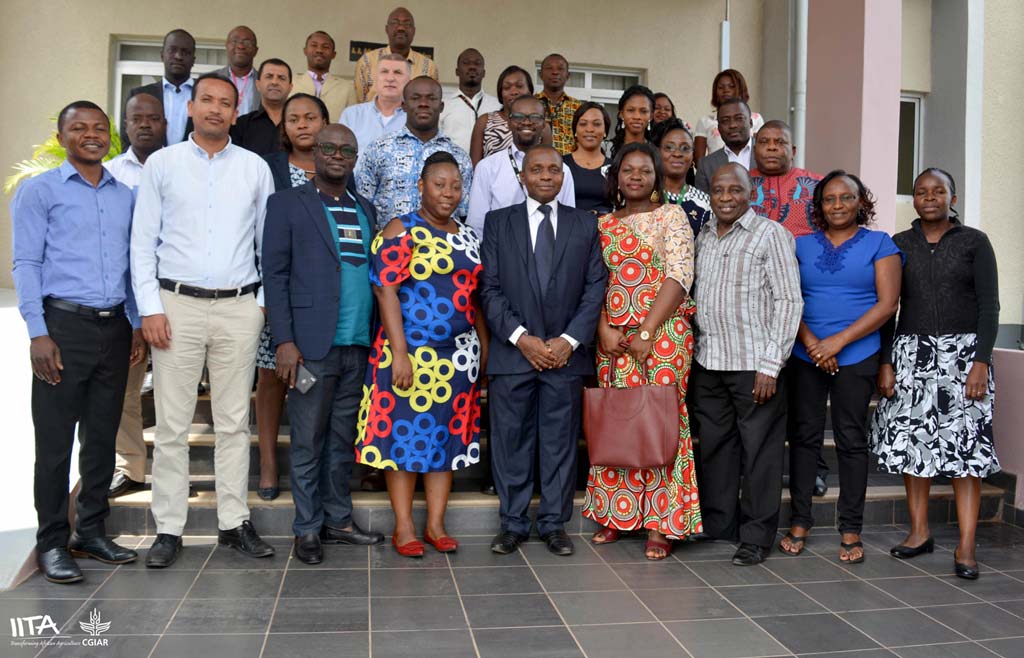 Participants were taken through the processes of procurement of goods, works, and consultancy services in line with Bank guidelines. Contentious issues identified by participants were addressed during the interactive session that followed. Akem concluded the training by challenging participants on an immediate plan of action and putting into practice the knowledge they had gained.
Training participants during one of the presentations.
Group photo of training participants.
Contributed by
Recent stories
No items found