Why a soybean breeding network in East Africa makes sense now
July 23, 2025
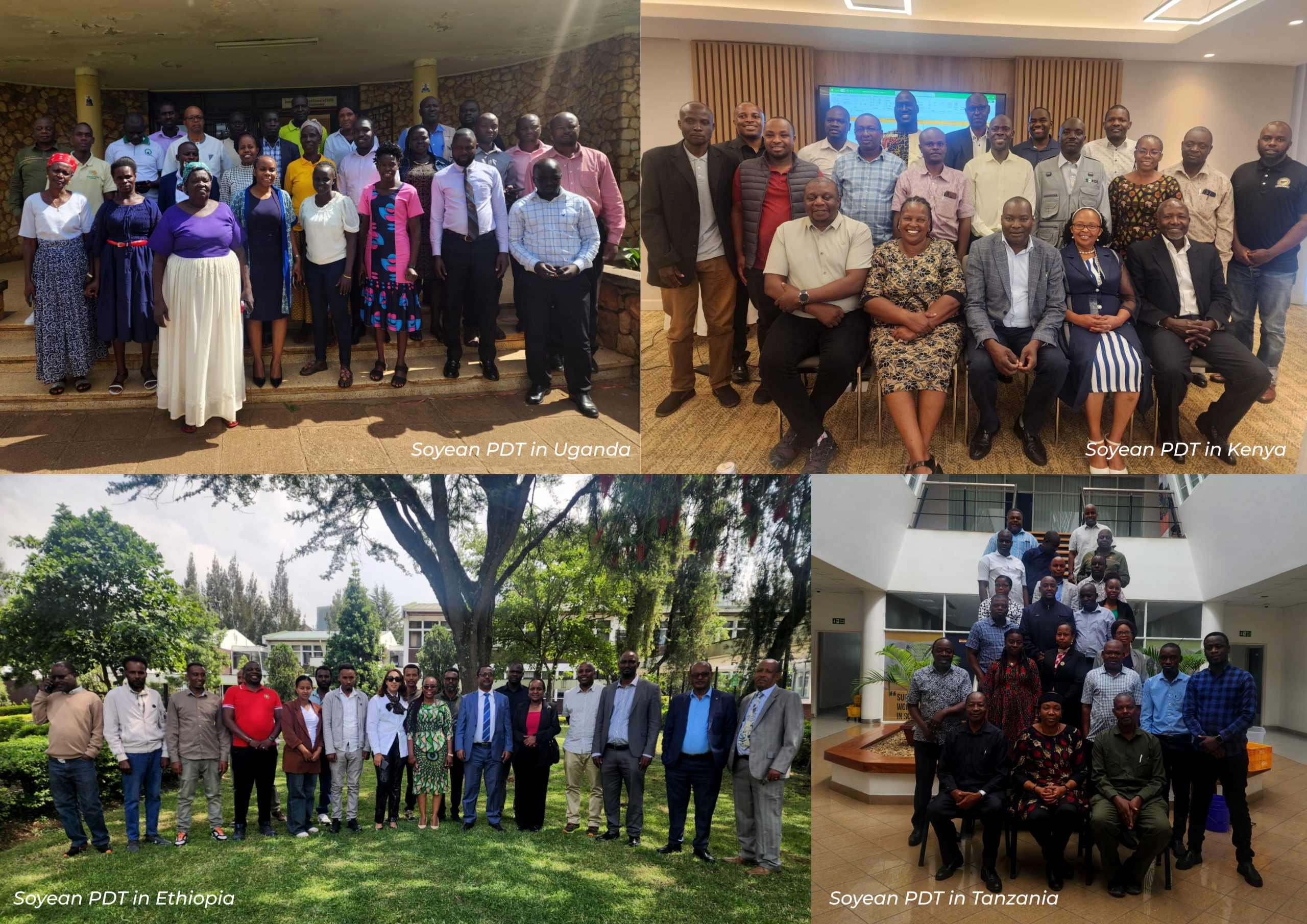
By Dr Godfree Chigeza, Soybean Breeder, International Institute of Tropical Agriculture (IITA), Dean Muungani, Product Manager – Grain Crops, IITA, and Lennin Musundire, CGIAR Accelerated Breeding TRANSFORM Lead for East Africa Group pictures of the PDT meetings of the soybean breeding network in East Africa. Credit: Lennin Musundire.
As climate variability increases, fueled by rapid population growth, changing diets, and expanding livestock and aquaculture sectors, demand for protein-rich crops, such as soybeans – a long-underutilised crop in East Africa – is stepping into spotlight. Yet, the region remains heavily reliant on imports, missing out on the economic and nutritional opportunities that a strong domestic soybean value chain could unlock.
To address this, a regional soybean breeding network is gaining traction, and experts say the time couldn’t be better. With funding support from the Gates Foundation, the network is being coordinated by International Institute of Tropical Agriculture (IITA), in collaboration with national research programs, private sector players and universities, working together to operationalize a regional soybean breeding network across Kenya, Uganda, Tanzania, and Ethiopia.
Why soybean and why now?
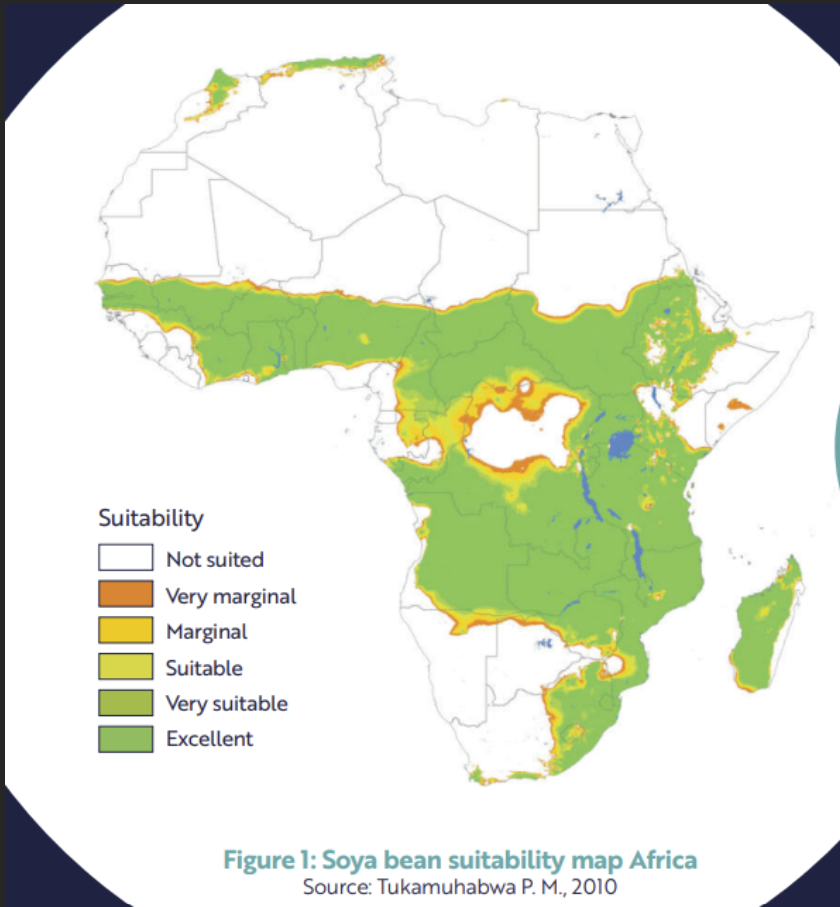
The soybean value chain holds great promises and demand is rising fast in East Africa. Soya is a source of protein which can be processed into soy-based food products and animal feed (e.g. soy meals or oilseed cakes), contributing to poultry, fish and livestock production for human consumption. It also produces edible oil as a co-product.
Figure 1: Soya bean suitability map Africa. Source: Tukamuhabwa P.M., 2010
Soya could support nutritional food security through soy-based foods and oils, but also increase soil health via nitrogen fixation and income generation through processing, value addition, and trade.
Despite favourable growing conditions, average yields across sub-Saharan Africa remain low – around 1.26 metric tonnes per hectare, compared to a global average of 2.76. In 2022 alone, Kenya, Tanzania and Uganda imported over 129,000 metric tonnes of soy products worth USD 84 million. In Kenya, current domestic production meets only 1% of annual demand, according to the Ministry of Agriculture and Livestock DevelopmentIn this context, improving regional production would reduce dependency on imports and significantly increase farmer incomes.
Shared needs, sharedsolutions
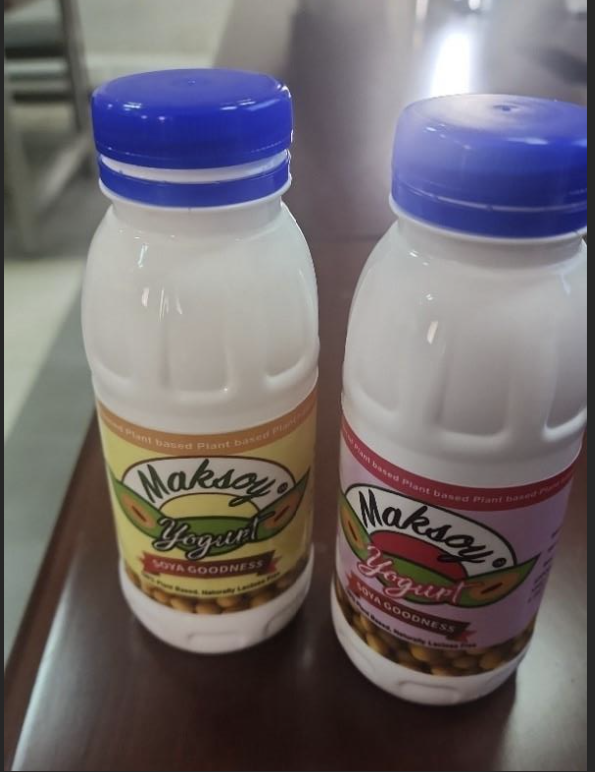
Soy yogurt in UgandaAcross East Africa, farmers and markets consistently demand similar core set of traits in soybean varieties.First and foremost, higher yields, then rust tolerance, improved oil and protein content, drought resilience and shorter maturity periods for varying agro-ecologies. Given these shared priorities, there’sno reason to breed in silos. By pooling resources, sharing germplasm, and specializing based on comparative advantages in the breeding process, the network member countries can breed faster, smarter, and together. “The goal is not just to improve breeding programs country by country,” says Lennin Musundire,CGIAR Accelerated Breeding TRANSFORM Lead for East Africa. “It’s to create a cohesive regional engine for soybean innovation, one that’s aligned with market needs and built to serve both farmers and processors.”
From national priorities to regional design
The first step in building the East African Soybean Network was engaging national stakeholders. CGIAR Accelerated Breeding TRANSFORM convened national Product Design Teams (PDTs) in all five countries. These multidisciplinary teams bring together farmers, processors and seed companies, government extension agents, gender and nutrition specialists, researchers and agro-dealers. Together, they:
Defined national market segments, based on maturity, colour, use, agroecology, and trait demand;
Developed Target Product Profiles (TPPs) – roadmaps that set trait priorities and thresholds for each market segment;
And aligned breeding goals with market realities, ensuring national research meets end-user needs.
Simultaneously, each country’s breeding program underwent a baseline assessment using tools from CGIAR Accelerated Breeding and Breeding Resources. This helped breeding teams evaluate infrastructure, human capacity, and current practices, and develop tailored improvement plans per program and location.
Designing the regional network
With national plans in place, attention shifted to regional integration. The East African Soybean Network have now defined role differentiation based on capacity, using a harmonized CGIAR scale. For example, Kenya (a “2B” program) leads crossbreeding and shares germplasm with the rest of the network. Other members, ranked “5A” programs, focus on selection, evaluation, or testing.Across the network, members share germplasm, data, and knowledge, reducing duplication and maximising efficiency. Finally, as the whole network uses the same, harmonized market segments and TPPs, varieties can be released and commercialized across multiple countries, facilitating regional seed trade.
Conclusion: regional breeding networks are the future
The East African soybean breeding network is still in its early stages, but its foundation is strong. By linking national expertise, CGIAR partnership framework and tools, private sector insight, and university training capacity, the network promises faster development of improved soybean varieties, greater resilience in regional protein supply chains and, ultimately, economic benefits for farmers, processors, and consumers in East Africa. As the partnership grows, CGIAR and national partners will continue to invest in shared infrastructure, training, and data systems, while helping countries track genetic gain, variety turnover, and market impact.The soybean breeding network is a blueprint for regional breeding collaboration, aligning science with markets, breaking institutional silos, and delivering value across the value chain. With rising demand and urgent needs for local protein sources, East Africa’s soybean story is just the beginning as similar efforts are underway in Southern and West Africa. Main picture: Group pictures of the PDT meetings of the soybean breeding network in East Africa. Credit: Lennin Musundire. This work contributes to CGIAR Breeding for Tomorrow (B4T) Science Program through its Accelerated Breeding and Enable areas of work.
Olamide Deborah Nwanze is a Senior Research Associate specializing in gender mainstreaming research to inform participatory and inclusive breeding, variety development, and seed systems policies regarding root, tuber, and banana (RTB) crops in the International Institute of Tropical Agriculture Headquarters, Ibadan, Nigeria. She is a PhD candidate at the University of Ibadan and holds an MSc and B. Agric in Agricultural Extension and Rural Development. Olamide is a fellow of the African Women in Agricultural Research and Development – Gender Responsive Agricultural Systems Policy (AWARD-GRASP) and the Gender Responsive Researchers Equipped for Agricultural Transformation (GREAT). She seeks to apply her gender-mainstreaming learnings, gender-responsive research, and policy development, and review expertise to facilitate women, youth, children, and vulnerable social group’s access to and adoption of agricultural Innovations that guarantee food, nutrition, income, and livelihood security in Africa. Her current roles include mentoring research fellows, development of guides and training manuals, implementation and adaptation of gender frameworks and tools, value chain actors’ engagement as citizen science partners, policy review and redesign, data management, and analysis. Her current research explores mixed methods and participatory and interdisciplinary approaches to capture and highlight gender dynamics, needs, preferences, and challenges stakeholders face within the agricultural livelihood value chain to prioritize gender-inclusive strategies in breeding programs, policy design, and implementation.
de Sousa, K., van Etten, J., Manners, R. Bello, A., Teeken, B., Olaosebikan, O., et al. 2024. The tricot approach: an agile framework for decentralized on-farm testing supported by citizen science. A retrospective. Agron. Sustain. Dev. 44, 8. https://doi.org/10.1007/s13593-023-00937-1
Madu, T., Onwuka, S., Nwafor, S., Onyemauwa, N., Ejechi, M., Ofoeze, M., Ukeje, B., Eluagu, C., Olaosebikan, O., Okoye, B., 2024. Gender-Inclusive Consumer Studies Improve Cassava Breeding in Nigeria in: Frontiers in Sociology, volume 9, number: 1224504, doi: 10.3389/fsoc.2024.1224504
Olaosebikan, O.; Bello, A.; Utoblo, O.; Okoye, B.; Olutegbe, N.; Garner, E.; Teeken, B.; Bryan, E.; Forsythe, L.; Cole, S.; Madu, T. 2023. Stressors and Resilience within the Cassava Value Chain in Nigeria: Preferred Cassava Variety Traits and Response Strategies of Men and Women to Inform Breeding. Sustainability 15, 7837. https://doi.org/10.3390/su15107837
Okoye, B., Ofoeze, M., Ejechi, M., Onwuka, S., Nwafor, S., Onyemauwa, N., Ukeje, B., Eluagu, C., Obidiegwu, J.*, Olaosebikan, O., Madu, T.* 2023. Prioritizing preferred traits in the yam value chain in Nigeria: a gender situation analysis in: Frontiers in Sociology, volume 8, number: 1232626, pages 1 – 9, ISSN 2297-7775, 2023. https://www.frontiersin.org/articles/10.3389/fsoc.2023.1232626/full
Olaosebikan, O., Bello, A. A., de Sousa, K., Ndjouenkeu, R., Adesokan, M., Alamu, E. O., Agbona, A., van Etten, J., Kegah, F. N.*, Dufour, D., Bouniol, A., Teeken, B. 2023. Consumer acceptability of cassava gari-eba food products across cultural and environmental settings using the triadic comparison of technologies approach (tricot) in: Journal of the Science of Food and Agriculture,
Teeken, B., Olaosebikan, O., Bello, A. A., Madu, T.*, Cole, S. M. 2023. Qualitative assessment on the positionality and preferences of dyads in relation to cassava-related activities: working with tricot trial citizen scientists https://hdl.handle.net/10568/138326 Type: Manual
Bouniol, A., Ceballos, H., Bello, A. A., Teeken, B., Olaosebikan, O., Owoade, D., Agbona, A., Fotso Kuate, A., Madu, T.*, Okoye, B.*, Ofoeze, M.*, Nwafor, S.*, Onyemauwa, N.*, Adinsi, L.*, Forsythe, L., Dufour, D. 2023. Varietal impact on women’s labour, workload and related drudgery in processing root, tuber and banana crops: focus on cassava in sub-Saharan Africa in: Journal of the Science of Food and Agriculture, pages 1 – 25, ISSN 0022-5142,
Bello, A. A., Agbona, A., Olaosebikan, O., Edughaen, G., Dufour, D., Bouniol, A., Iluebbey, P., Ndjouenkeu, R.*, Rabbi, I. Y., Teeken, B. 2023. Genetic and environmental effects on processing productivity and food product yield: drudgery of women’s work in: Journal of the Science of Food and Agriculture, pages 1 – 32, ISSN 0022-5142, 5
Cavicchioli, M., Zimbiti, T., Teeken, B., Nwanze, D.O., Liani, M., Parkes, E. & Bello, A. 2023. IITA-Gender Responsive Breeding Training Report. Genetic Resources Center, IITA-HQ, Ibadan, 21-23 September, 2022. Ibadan, Nigeria: IITA, (34 p.).https://hdl.handle.net/10568/131368
Agbona, A. Peteti P., Teeken B., Olaosebikan O. Bello, A. A., Parkes, E., Rabbi, I. Y., Mueller, L., Egesi, C., Kulakow, P. 2022. Data Management in Multi-disciplinary African RTB Crop Breeding Programs. In: Williamson, H.F., Leonelli, S. (eds) Towards Responsible Plant Data Linkage: Data Challenges for Agricultural Research and Development. Springer, Cham. https://doi.org/10.1007/978-3-031-13276-6_5
Lora Forsythe, Pricilla Marimo, Sarah Mayanja, Olamide D. Olaosebikan, Esme Stuart, Bela Teeken, Benjamin Okoye, Tessy Madu, (2021). Cross-product Gender Analysis of RTBfoods Step 2 Gendered Food Mapping on RTB Products. Understanding the Drivers of Trait Preferences and the Development of Multi-user RTB Product Profiles, WP1. London, UK: RTBfoods Field Scientific Report, 30 p.
Teeken, B., Garner, E., Agbona, A., Balogun, I., Olaosebikan, O., Bello, A., Madu, T., Okoye, B., Egesi, C., Kulakow, P. and Tufan, H.A. 2021. Beyond “Women’s Traits”: Exploring How Gender, Social Difference, and Household Characteristics Influence Trait Preferences. Frontiers Sustainable Food Systems 5:740926. https://doi.org/10.3389/fsufs.2021.740926
Teeken, B., Agbona, A., Bello, A., Olaosebikan, O., Alamu, E., Adesokan, M., Awoyale, W., Madu, T., Okoye, B., Chijioke, U., Owoade, D., Okoro, M., Bouniol, A., Dufour, D., Hershey, C., Rabbi, I., Maziya‐Dixon, B., Egesi, C., Tufan, H. and Kulakow, P. (020. Understanding cassava varietal preferences through pairwise ranking of gari‐eba and fufu prepared by local farmer–processors. Int J Food Sci Technol.https://doi.org/10.1111/ijfs.14862
Bela Teeken, Olamide Olaosebikan, Ireti Balogun, Benjamin Okoye, Tessy Madu, Steven Cole, Abolore Bello, Elizabeth Parkes. (2020). Piloting the G+ customer and product profile tools for gender-responsive cassava breeding in Nigeria. Nigeria: International Institute of Tropical Agriculture (IITA). https://hdl.handle.net/20.500.11766/13000