Agricultural research institutions may need to rethink not only how they develop technologies, but also the assumptions, relationships, and systems that determine whose knowledge counts, how solutions are shaped, and what ultimately defines impact.
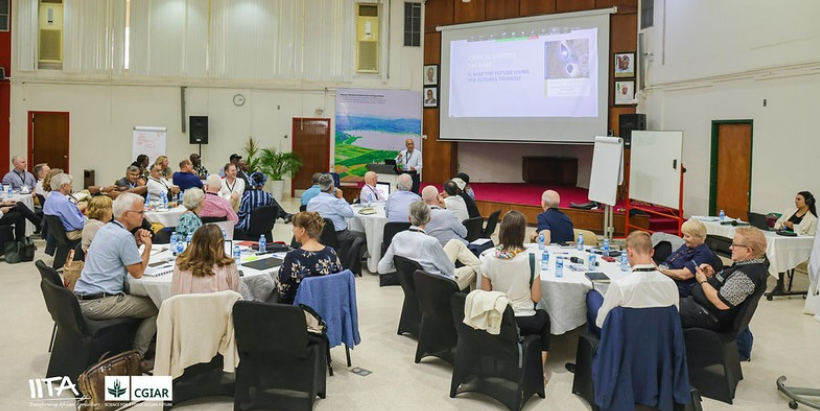
That was a central message that emerged from the CGIAR futures workshop, which brought together Board Members and the 12 Director Generals of CGIAR institutes to examine how agricultural research could evolve in the face of climate change, food-system vulnerabilities, and increasingly complex challenges confronting farmers and communities.
Facilitated by the UNESCO Chair on Future Studies Sohail Inayatullah, the workshop introduced participants to futures-thinking approaches designed to question assumptions about the future, explore alternative possibilities, and identify pathways towards a preferred future.
One of the key concepts explored was the idea of a “used future,” a future shaped by assumptions, practices, and institutional models inherited from the past and repeatedly carried forward, even when the conditions around them have changed.
Within agricultural research, the traditional Green Revolution model was discussed as an example of this kind of thinking: scientists generate technologies, research institutions transfer them through extension systems, and farmers are positioned largely as recipients expected to adopt the resulting innovations.
The workshop questioned whether such a linear model is sufficient for a world where climate pressures, changing food systems, diverse local realities, and the value of indigenous and farmer knowledge are increasingly important.
For CGIAR Executive Managing Director Dr Ismahane Elouafi, the challenge goes beyond changing organizational structures. It requires changing the relationship between agricultural research and the people and systems it seeks to serve. Elouafi highlighted the need to move from a predominantly supply-driven, expert-to-recipient model towards greater co-creation involving researchers, farmers, and other actors across food systems.
In such a model, farmers are not simply end users of technology. Their knowledge, experience, and understanding of local conditions become part of the process of defining problems, shaping solutions, and determining whether those solutions are relevant.
This also means looking beyond formal strategies and organizational structures to examine the deeper assumptions that influence how institutions operate.
Through causal layered analysis, participants explored how visible policies and strategies can coexist with deeper worldviews, narratives, and assumptions that continue to shape institutional behavior.
The exercise suggested that changing structures alone may not necessarily change the way institutions think or work. A deeper transformation may require institutions to question the stories they tell about their purpose, the relationships they build, and the measures they use to define success.
Beyond scientific publications and yield gains, Dr Elouafi pointed to considerations such as long-term soil health, nutritional diversity, and community agency as important elements in imagining future food systems.
Imagining a different CGIAR
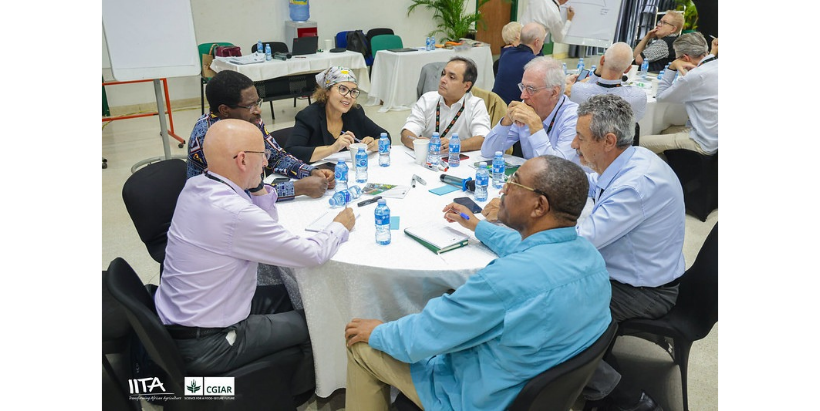
The workshop did not stop at diagnosing what needs to change. In breakout sessions, participants were asked to imagine alternative futures and develop new metaphors for the systems and relationships they would like to see.
One vision was captured through the metaphor of “the Nimble Wise Octopus,” an image of a system with empowered and capable national agricultural research systems, or NARS, rooted in their ecosystems through equitable relationships.
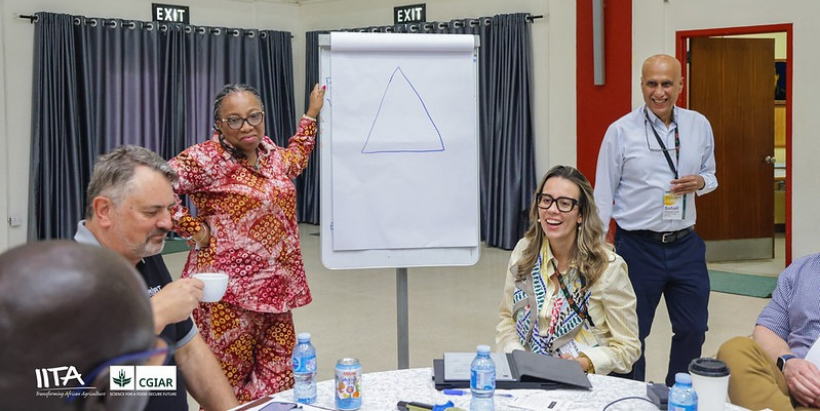
Another group envisioned “the Hive,” describing a CGIAR that engages countries and regions through a demand-driven worldview and focuses on delivering science with measurable impact.
The “Neural Network” offered another possible direction, centered on connecting knowledge and actors around packaged, scalable solutions.
Participants also imagined a future in which agriculture and nature are trusted allies, with locally contextualized agriculture and nature systems that serve purposes beyond food production, connect with other systems, and draw on a much wider range of commodities than those dominant today.
A further metaphor, “the Baobab Talking Tree,” captured the idea of building a single, connected system that brings people, data, and expertise together around real needs, both virtually and on the ground.
Taken together, these visions point to a different conception of agricultural research: less isolated, less linear, and more connected to the ecosystems, institutions, knowledge systems, and communities in which research is ultimately expected to create value.
From preferred futures to action
Participants also examined different possible pathways towards what a preferred future could look like. A fundamental question was what the relationship between science, farmers, national research systems, policymakers, and other food-system actors should look like in the future.
The answer, according to the deliberations, may require more than new technologies or organizational restructuring. It may require new relationships, new measures of impact, stronger connections between knowledge systems, and a willingness to challenge institutional assumptions that have become so familiar that they are no longer questioned.
Dr Ismahane stated that the significance of the futures exercise lies not in predicting a single future for agricultural research, but in making alternative futures visible and asking what institutions must begin doing differently now if they want those futures to become possible.