
IITA to work with Osun State in raising agribusiness ambassadors
February 4, 2020
On 23 January, the Osun State Commissioner for Education, Hon Folarunsho Oladoyin visited IITA Ibadan campus with his Assistant, Bukola Elufisan and the Special Adviser to the Governor on Education, Jamiu Olawumi. The purpose of their visit was to collaborate with IITA through the IITA Youth Agripreneurs (IYA) and Start Them Early Program (STEP) platforms, to raise agribusiness ambassadors in Osun State.
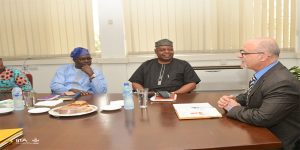 Concerned about the high rate of unemployment, with youth increasingly graduating into a no-job system, Osun State is seeking better ways to create more employment opportunities. Also, the State intends to improve its educational system while working to solve the problem of unemployment.
Following the advice of Akinwumi Adesina, President of the African Development Bank (AFDB), Hon Oladoyin considered partnering with IITA in solving the problem of unemployment through agriculture. According to the commissioner, “Adesina said ‘the best and easiest way to solve the problem of unemployment in Africa is to use the resources we have,’ and agriculture is the resource we have.”
The plan is for IITA to train 20 ambassadors that will complement the work of the STEP and IYA teams in Osun State. The essence of the training is to equip the ambassadors with the required knowledge and skills to run and sustain the program in the absence of the IITA team, including training others. “If they are not well trained, they might end up drowning the interest of students in agriculture rather than encouraging them,” he said.
Hon Jamiu mentioned that not only should agribusiness ideas be introduced to primary and secondary schools, but also extended to tertiary institutions and every institution that runs agricultural programs in Osun State. “I think Osun State is a better place to go with STEP and IYA because we have set-up structures that can accommodate these programs,” he said.
Aside from changing the mindset of students and unemployed youth towards agriculture, the Commissioner also suggested that there should be a shift in the mindset of the employed from white-collar jobs to agriculture through a mindset-change program. Hon Folarunsho also emphasized o the need to construct a School of Agriculture where practical training and resources will be made available in Osun State.
Kenton Dashiell, IITA Deputy Director General, Partnerships for Delivery (P4D), agreed to the idea of IITA assisting in drafting the training plan and budget. However, this would be after an official letter has been sent to that effect from the Commissioner.
Concerned about the high rate of unemployment, with youth increasingly graduating into a no-job system, Osun State is seeking better ways to create more employment opportunities. Also, the State intends to improve its educational system while working to solve the problem of unemployment.
Following the advice of Akinwumi Adesina, President of the African Development Bank (AFDB), Hon Oladoyin considered partnering with IITA in solving the problem of unemployment through agriculture. According to the commissioner, “Adesina said ‘the best and easiest way to solve the problem of unemployment in Africa is to use the resources we have,’ and agriculture is the resource we have.”
The plan is for IITA to train 20 ambassadors that will complement the work of the STEP and IYA teams in Osun State. The essence of the training is to equip the ambassadors with the required knowledge and skills to run and sustain the program in the absence of the IITA team, including training others. “If they are not well trained, they might end up drowning the interest of students in agriculture rather than encouraging them,” he said.
Hon Jamiu mentioned that not only should agribusiness ideas be introduced to primary and secondary schools, but also extended to tertiary institutions and every institution that runs agricultural programs in Osun State. “I think Osun State is a better place to go with STEP and IYA because we have set-up structures that can accommodate these programs,” he said.
Aside from changing the mindset of students and unemployed youth towards agriculture, the Commissioner also suggested that there should be a shift in the mindset of the employed from white-collar jobs to agriculture through a mindset-change program. Hon Folarunsho also emphasized o the need to construct a School of Agriculture where practical training and resources will be made available in Osun State.
Kenton Dashiell, IITA Deputy Director General, Partnerships for Delivery (P4D), agreed to the idea of IITA assisting in drafting the training plan and budget. However, this would be after an official letter has been sent to that effect from the Commissioner.
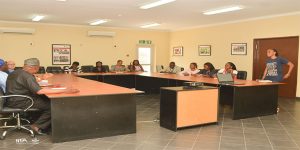
Kenton Dashiell (right), introducing IITA to the Commissioner and his team.
The Special Adviser to the Governor on Education, Jamiu Olawumi, responding to the presentation of IYA and STEP Coordinators.
Contributed by
Recent stories
No items found