
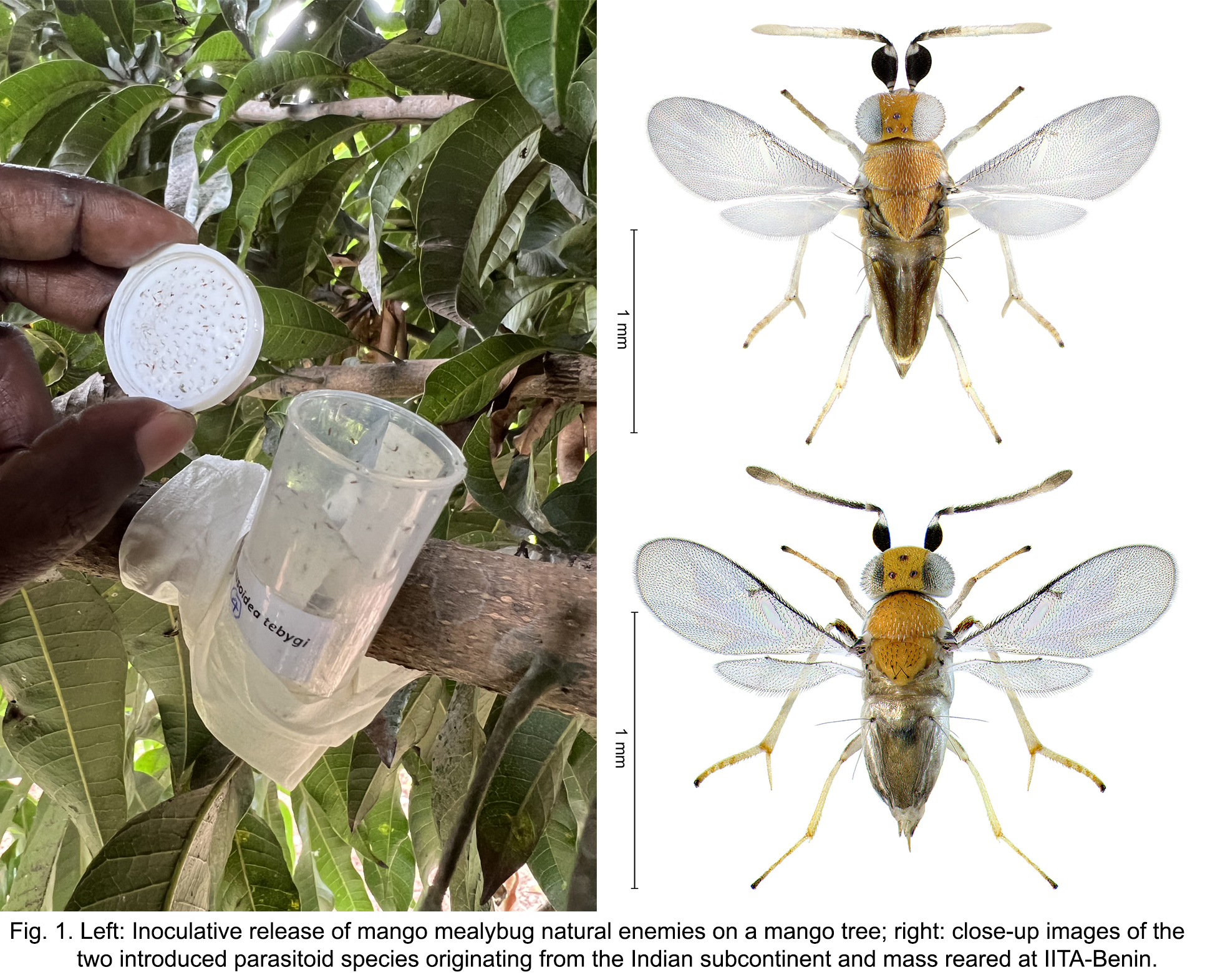
In the 1990s and 2000s, the exotic mango mealybug, Rastrococcus invadens, was effectively controlled in West Africa. This was achieved by introducing two parasitoids from India, the native country of both mango and mango mealybug.
 In 2019, the same pest was detected for the first time in Eastern Africa, specifically in Rwanda. The infestation led to a staggering 92% reduction in mango production in 2022, as reported by the Food and Agriculture Organization (FAO). The cumulative mango production losses for Rwanda alone between 2019 and 2023 were estimated at USD 23.6 million.
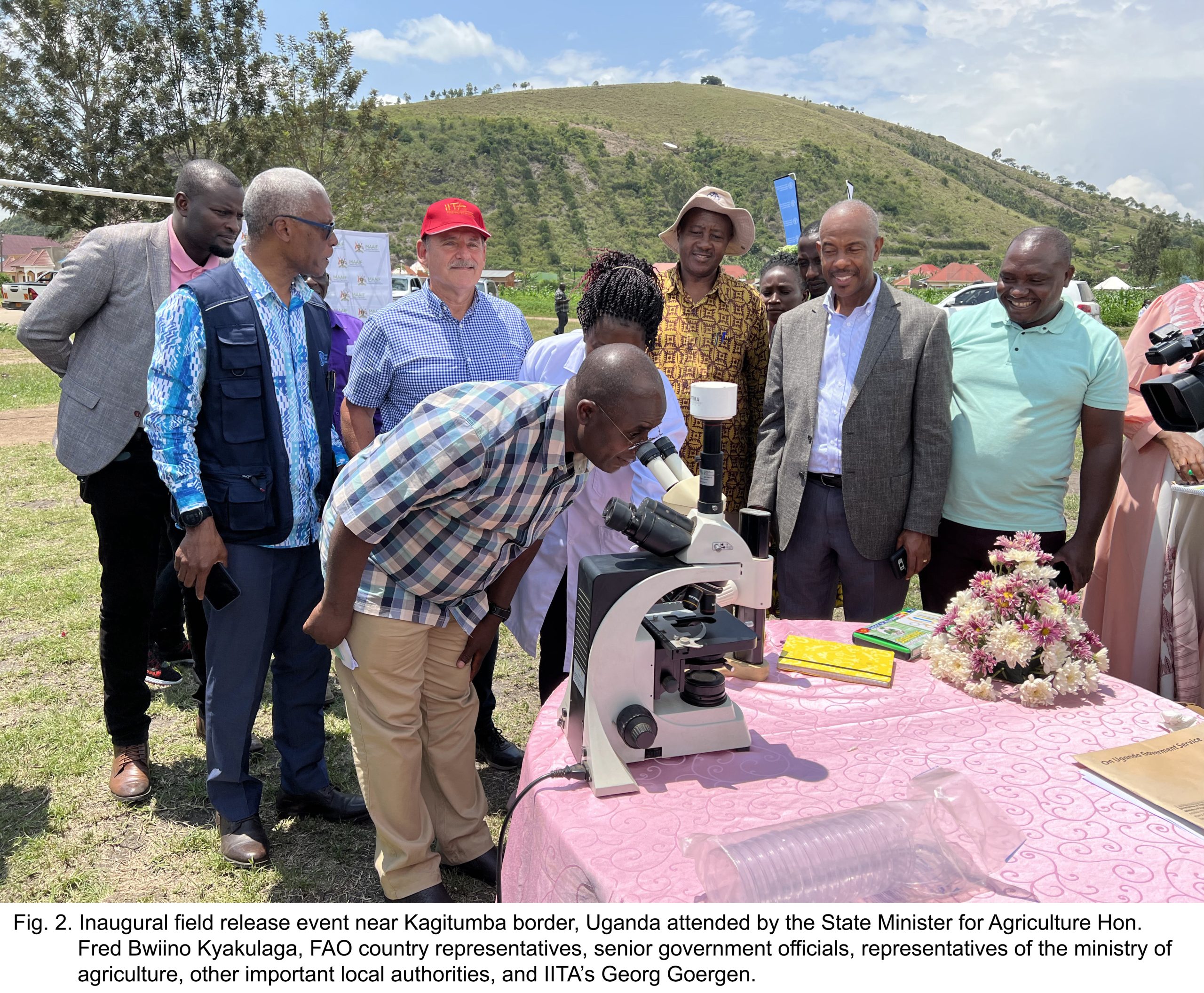
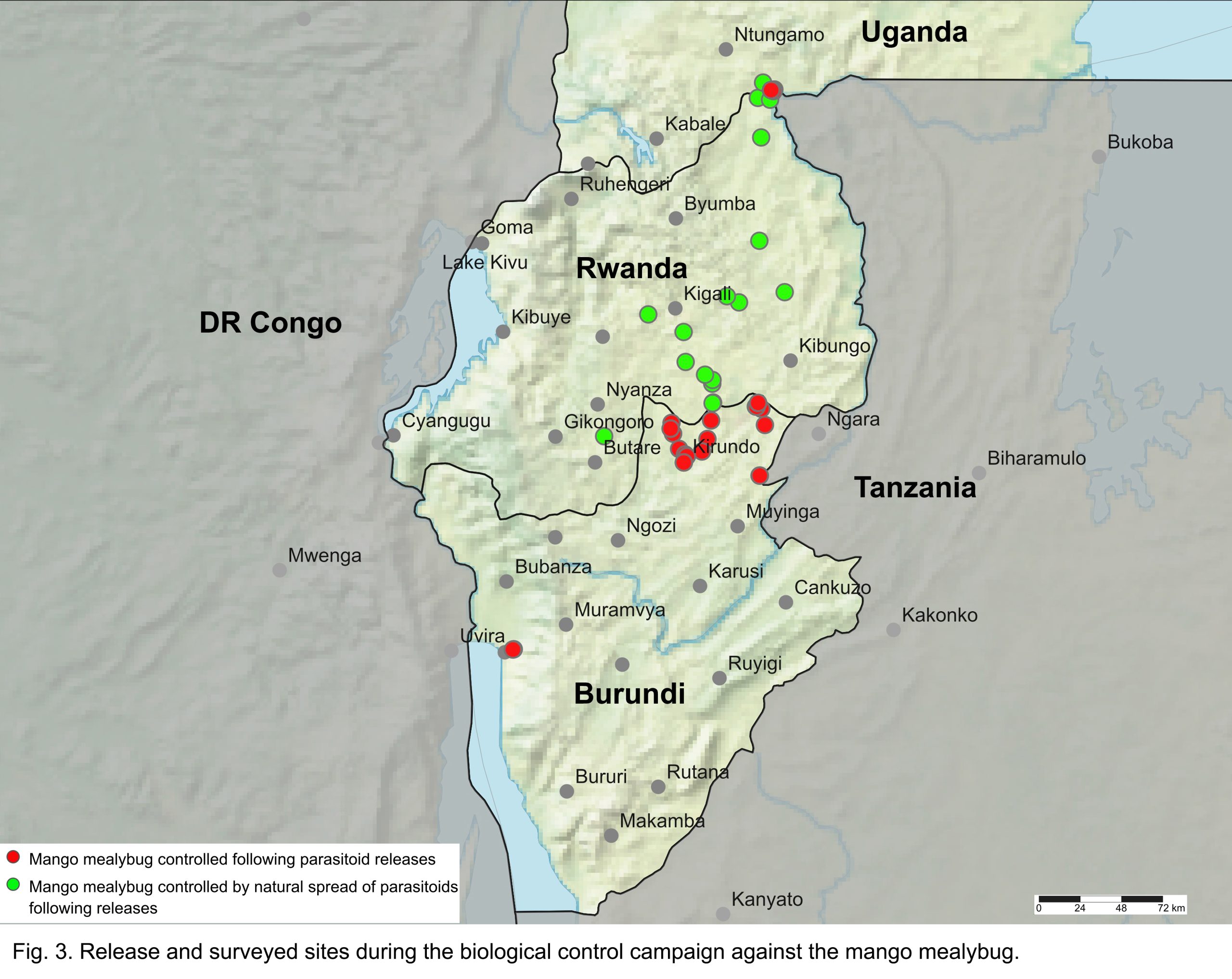 To address this, the Food and Agriculture Organization financed a classical biological control program managed by the Subregional Office for Eastern Africa (SFE) and executed by IITA–CGIAR. The two biocontrol agents were reared in the insectaries at IITA-Benin, where extension agents from Burundi, Rwanda, and Uganda received training in mass production and monitoring techniques. Initial field releases with parasitoids supplied by IITA-Benin took place in Burundi in May 2022 and Uganda in October 2022. Both releases were conducted near the Rwandan border.
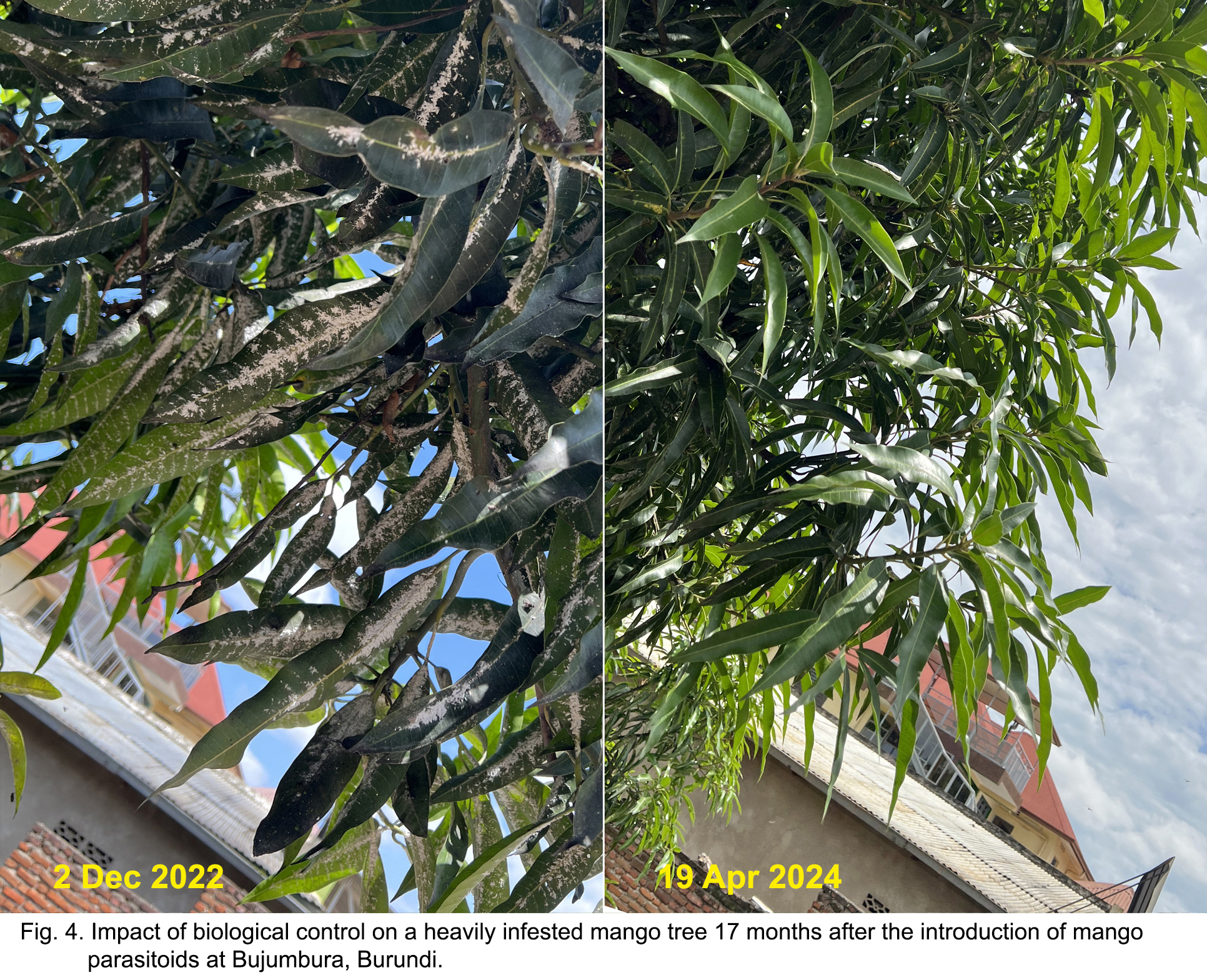 Two years later, joint surveys in all three countries by IITA Biodiversity Center Lead Georg Goergen, in collaboration with FAO, SFE staff, and national scientists, revealed a complete collapse of the pest population. It is estimated that around 250,000 trees in these countries were freed from this pest at no cost to the producers. Overall, costs were minimal because IITA and its collaborators in West Africa had already done all the preparatory work. This success, like the earlier control of the cassava mealybug in Asia from IITA labs in Benin, underscores the importance of maintaining the capacity for quick and precise diagnosis and rapid response at IITA.
 However, a few mango mealybugs were still found in three specific situations: in town centers, particularly bus stops in areas with poor air quality due to traffic pollution, which negatively affected the parasitoids; in plantations treated with insecticides for other pests, which also killed the introduced parasitoids; and on trees with roots covered by asphalt or concrete. These interactions between plants, pest insects, and their natural enemies highlight the need for careful Integrated Pest Management (IPM) measures to sustain the impact of both introduced and indigenous natural enemies. Crop Production Officer at FAO-SFE, Orlando Sosa, highlighted the project’s sustainable impact: “While we cannot eradicate the mango mealybug, the parasitoids provide a permanent and low-cost solution, ensuring long-term control and sustainability.”
As in West Africa, this recent success in biological control of the mango mealybug adds to the documented impact of the same parasitoids in Eastern Africa. Georg Goergen states, “In our joint efforts with FAO to combat the mango mealybug infestation in Eastern Africa, introducing parasitoids supplied by IITA has been a tremendous success and a game-changer. They have rapidly spread and effectively decimated the pest population, demonstrating even higher efficiency than in West Africa.”
Contributed by IITA-Benin team.
Contributed by
Recent stories